Guide to Milk, Cream, and Plant Milk
A guide to different types of milk, cream, plant milk, and other liquid dairy products frequently used in baking, pastry, and candy recipes. Because I’ve lived and worked in both the US and the UK, I’ve included both British and American dairy products, as well as the best conversions and substitutions if you can’t find a common British cream or dairy ingredient (clotted cream, double cream) in the US, or an American ingredient (like heavy cream) in the UK!
Dairy Milk
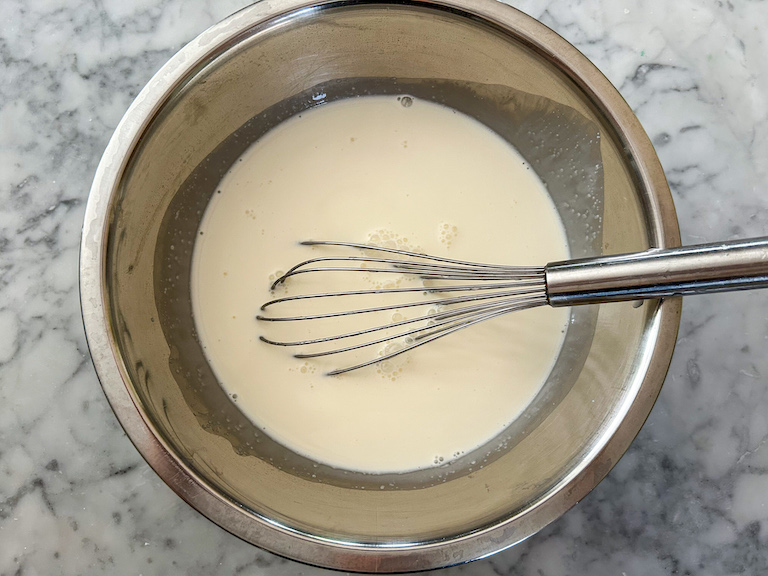
You’ll find dairy milk with a range of fat contents, from whole milk (about 3.25% fat in the US; 3.5-3.7% in the UK), two percent/reduced-fat (semi-skimmed) milk (about 2% fat in the US; 1.7-1.8% in the UK), and skim (skimmed) milk (less than 0.5% fat). Higher-fat milk produces richer baked goods, creamier frostings, and silky-smooth hot chocolates, which is why nearly all of my recipes call for whole milk. Most milk types can be substituted for one another in baking, but remember that whole milk will yield the richest flavor and texture.
Heavy Cream
Heavy cream, sometimes also called heavy whipping cream in the United States, contains at least 36% milkfat. This high fat content makes it ideal for whipping into homemade whipped cream, or turning into ultra-creamy ice creams and smooth chocolate ganaches.
Whipping Cream
In the UK and Europe, you’ll find whipping cream on supermarket shelves rather than heavy cream. In the UK, whipping cream contains 35%-38% milkfat. I use British whipping cream and American heavy cream interchangeably in my recipes, depending on where I am when I’m baking. If a recipe calls for heavy cream, whipping cream will almost always work, and vice versa.
Single Cream
Single cream is a British dairy product containing about 18% milkfat. It’s ideal for making sauces, pouring over desserts like puddings and crumbles, or stirring into coffee. Single cream does not contain enough fat to whip. Single cream is not widely sold in the United States, and is not an ingredient I use often in my recipes. If you do find a recipe that calls for single cream, American half-and-half is the closest substitute.
Double Cream
Double cream is an ultra-rich British cream containing about 48% milk fat. It’s much more viscous than whipping cream or American heavy cream, and the high fat content also prevents it from curdling when heated. Like single cream, you can pour double cream over desserts such as sticky toffee pudding. It also produces an exceptionally thick, stable whipped cream that can be used for piping and decorating, and can be baked into quiches or custard-based tarts. I don’t typically use double cream in my recipes, but in the US, heavy cream will be the closest option if you find a British recipe requiring double cream.
Clotted Cream
Clotted cream is a thick British cream made by slowly heating full-fat milk or cream until a rich layer forms on the surface, resulting in a product containing about 55-64% milkfat. It is traditionally served with scones and jam (although which comes first remains the subject of intense debate!) Clotted cream isn’t a common baking ingredient, but is sometimes found in confectionery recipes, particularly clotted cream fudge. You actually can’t buy traditional British clotted cream in the US due to FDA regulations (real clotted cream is made with raw milk), but some supermarkets or British specialty shops sell a pasteurized version. It’s not quite the same (or quite as good!) as the real UK kind, but it will work in a pinch.
Half-and-Half
When I first moved to the UK and went to the supermarket in search of half-and-half for my morning coffee, I quickly learned that this blend of equal parts whole milk and cream is a uniquely American creation! In the US, half-and-half is commonly added to tea and coffee, and used in some baked goods or buttercream recipes, but does not contain enough fat to whip. In the UK or other countries where half-and-half is unavailable, mixing equal parts whole milk and heavy cream produces a similar substitute.
Sour Cream (Soured Cream)
Sour cream (soured cream, in the UK) is cream fermented with lactic acid bacteria, giving it a tangy flavor. The 18-20% fat in sour cream adds moisture, richness, and tenderness to baked goods, cheesecakes, and savory dips. In the UK, products labeled “soured” cream are generally equivalent to American sour cream and can be used interchangeably. Full-fat Greek yogurt also makes a suitable replacement for sour(ed) cream.
Coffee Creamer (Non-Dairy Creamer)
Non-dairy creamer is a shelf-stable or refrigerated coffee additive made from ingredients such as vegetable oils, sweeteners, and emulsifiers rather than cream. Like half-and-half, this is mostly an American creation. It is designed primarily for beverages and does not perform like dairy cream in baking or cooking. Do not use non-dairy creamer in recipes unless the recipe specifically calls for this type of product, and do not use it as a substitute for dairy milk or cream.
Plant Milks
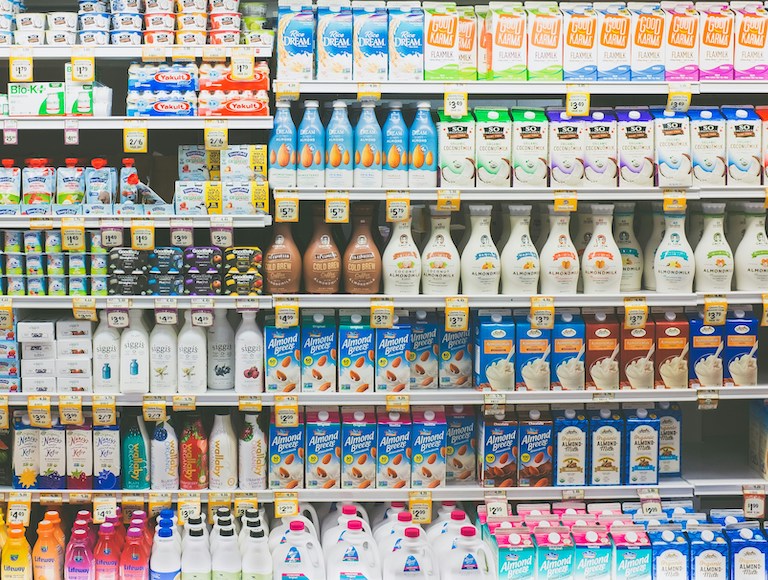
Plant milks are dairy-free beverages made from almonds, oats, soy, coconut, rice, cashews, and other plant-based ingredients. I frequently develop breakfast recipes (smoothies, overnight oats) with plant milk to make them vegan-friendly, but I do not typically use plant milks in my baking—plant milks vary wildly in viscosity, flavor, protein, and fat content, all of which can affect the texture and browning of baked goods. I don’t recommend replacing dairy milk with plant milk unless clearly stated in the recipe. And be mindful of the differences between full-fat, canned coconut milk and boxed coconut beverages; these also cannot be used interchangeably due to differing fat contents.

Rebecca Frey is a freelance recipe developer, food writer, photographer, stylist, and pastry chef. She earned the Diplôme de Pâtisserie (French Pastry Techniques Diploma) from Le Cordon Bleu London in 2020 and an MSc in Culinary Innovation from Birkbeck, University of London in 2022, where she focused her dissertation research on Pennsylvania Dutch recipes. She also holds a Professional Chocolatier’s Certificate from Ecole Chocolat. Rebecca has developed recipes for websites including Serious Eats, The Spruce Eats, Wine Enthusiast, and others. Follow her on Instagram @bastecutfold.