
Clotted Cream Fudge
This post may contain affiliate links. Please read the disclosure policy to learn more.
Thank you for supporting this blog!
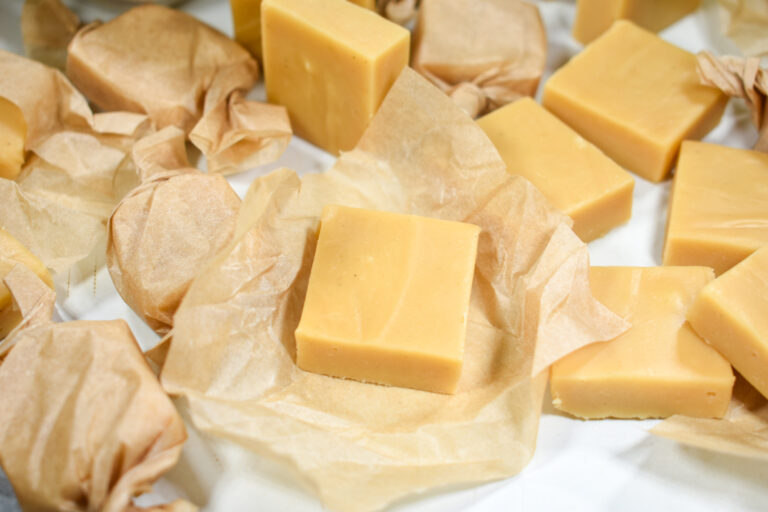
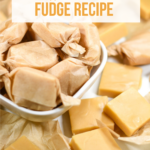
A recipe for clotted cream fudge, a traditional British style fudge made from clotted cream, golden syrup, and unrefined caster sugar. Delicious, easy to make, and ideal for gifting!
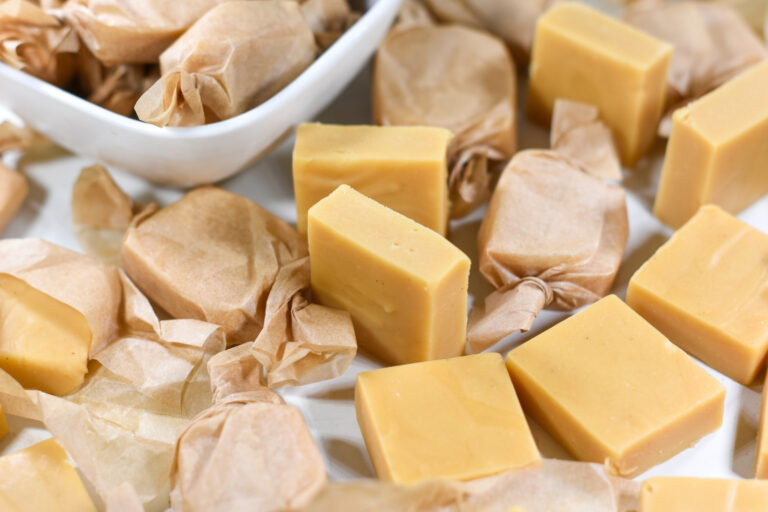
What Is Clotted Cream Fudge?
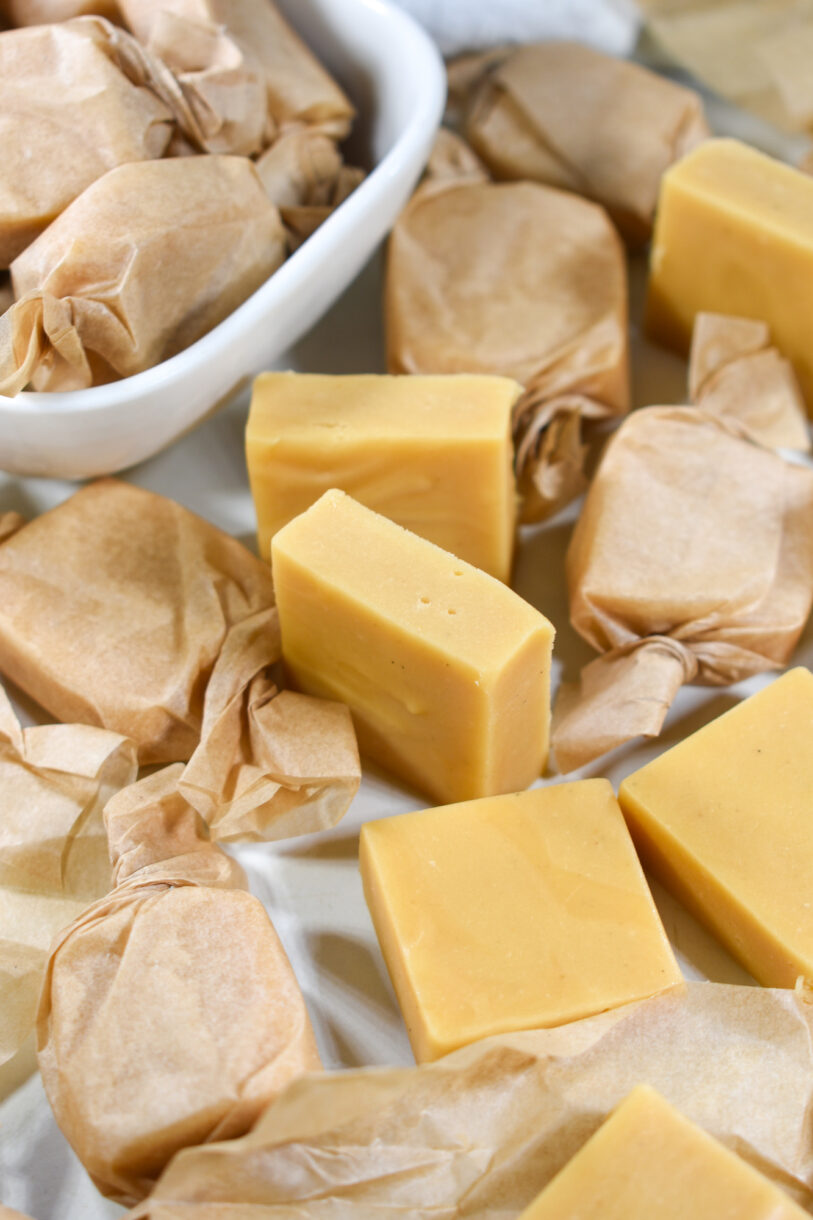
I first tasted clotted cream fudge years ago, during a visit to Chipping Campden, a tiny village in the Cotswolds. I picked up a box in a tourist shop, thinking that it would taste like the American fudge I’d loved since childhood. Turns out that the two are not quite the same. Denser and sometimes a bit more crumbly than its American counterpart, British fudge comes in dozens of flavors, and is frequently found in gift shops and at outdoor markets and street fairs. (National Geographic has an interesting article about the history of the confection in both the US and UK.) While I’ve never tried a British fudge that I didn’t like, the clotted cream variety is my favorite. In a pinch, even UK grocery stores like Sainsbury’s, Waitrose and Marks & Spencer sell packaged clotted cream fudge (and it’s pretty good!), but nothing beats homemade.

This clotted cream fudge recipe is not difficult to make, but you do need to pay very close attention to temperatures. If you do not cook your fudge mixture long enough, you’ll have fudge sauce instead. On the flip side, cook it too long and you’ll find yourself with a batch of toffee or hard candy, rather than soft fudge. So if you haven’t made your own fudge before, don’t feel frustrated if the first batch doesn’t turn out perfectly. It can take a trial run or two to truly get the hang of things!
Key Ingredients
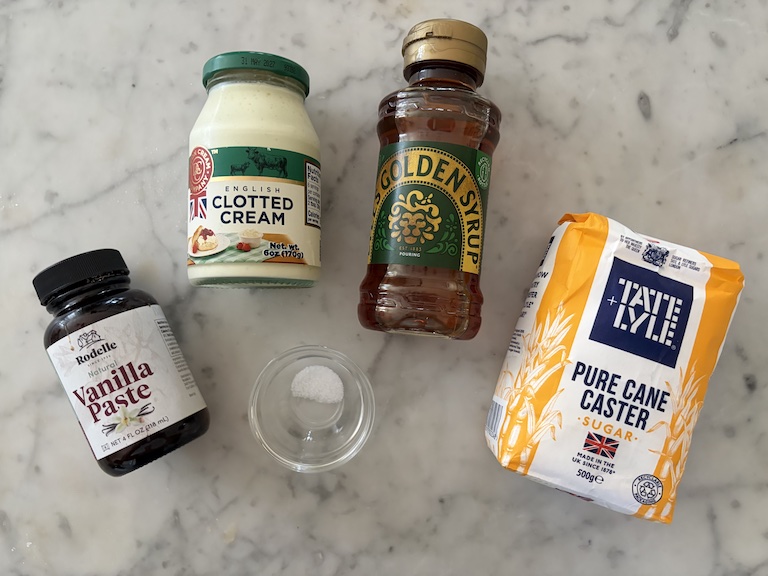
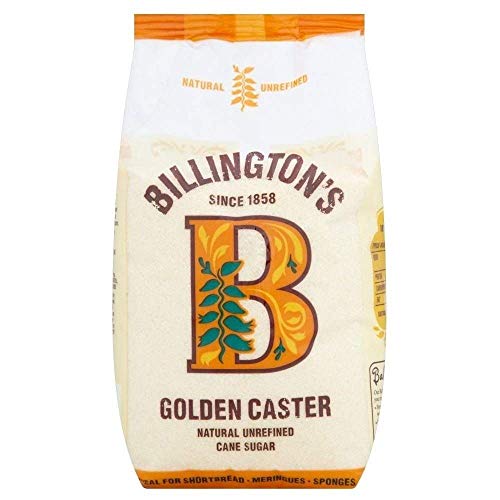
I originally developed this clotted cream fudge recipe using Billington’s golden caster sugar (both the traditional and unrefined versions will work), Rodda’s clotted cream, Lyle’s golden syrup, and Nielsen-Massey vanilla bean paste.
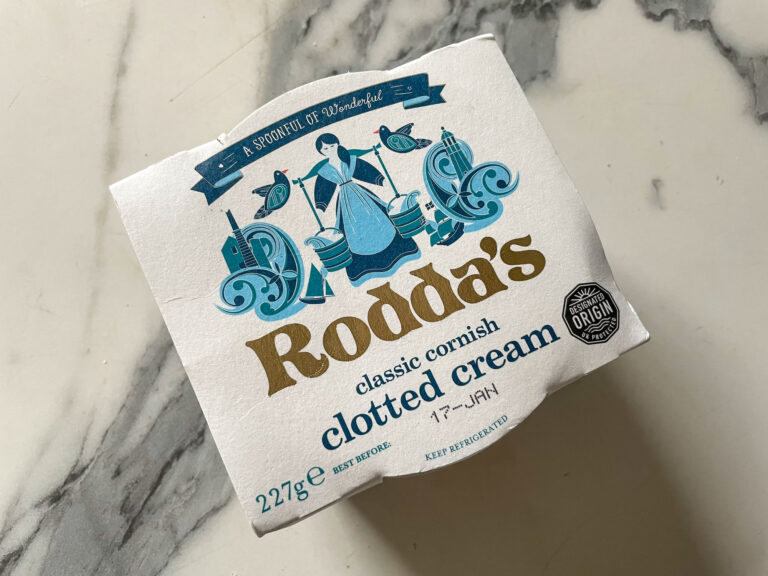
If you’re in the United States or elsewhere in the world, you might find these British staples difficult to source, so I’ve also tested a version of this recipe with ingredients more readily available in the US: jarred clotted cream (available at most Whole Foods stores in the US), and standard white caster sugar (sometimes called superfine sugar). You can also purchase British ingredients from Amazon, a British shop like Myers of Keswick in NYC, or in the international aisle of a larger grocery store.
Tips & Tricks
- You will need a candy thermometer. Do not attempt this recipe without one! It’s important to use a thermometer for this recipe rather than trying to “eyeball” or guess, because the temperature is crucial. If you don’t cook the mixture long enough, or to a high enough temperature, the fudge will not set. On the other hand, if you cook it to too high a heat, the fudge will be too hard. When using your digital thermometer to check the temperature, be careful not to touch the bottom of the pan with the probe. This can lead to a false reading, as the metal bottom is the hottest part of the pan. My tried-and-true favorite is this waterproof digital thermometer by Taylor Precision Products.
- Use a sharp knife. You’ll also need a clean, sharp chef’s knife for cutting the fudge. If you have one, you can also use a guitar cutter or a multi cutter, but a knife will work.
- Cook in a stock pot. I suggest using a large, heavy-bottomed stock pot to cook the fudge. Opt for stainless steel, rather than a pot with nonstick coating. Also make sure to choose a pot with a lid.
- Adjust the size of the squares. As written, this recipe makes 36 squares of fudge, each about 1 1/4 inches square. The squares will not be overly thick (they should be approximately 1/2-inch thickness) if made in an 8 x 8 tin; for super thick fudge, use a slightly smaller tin and adjust the setting time as needed.
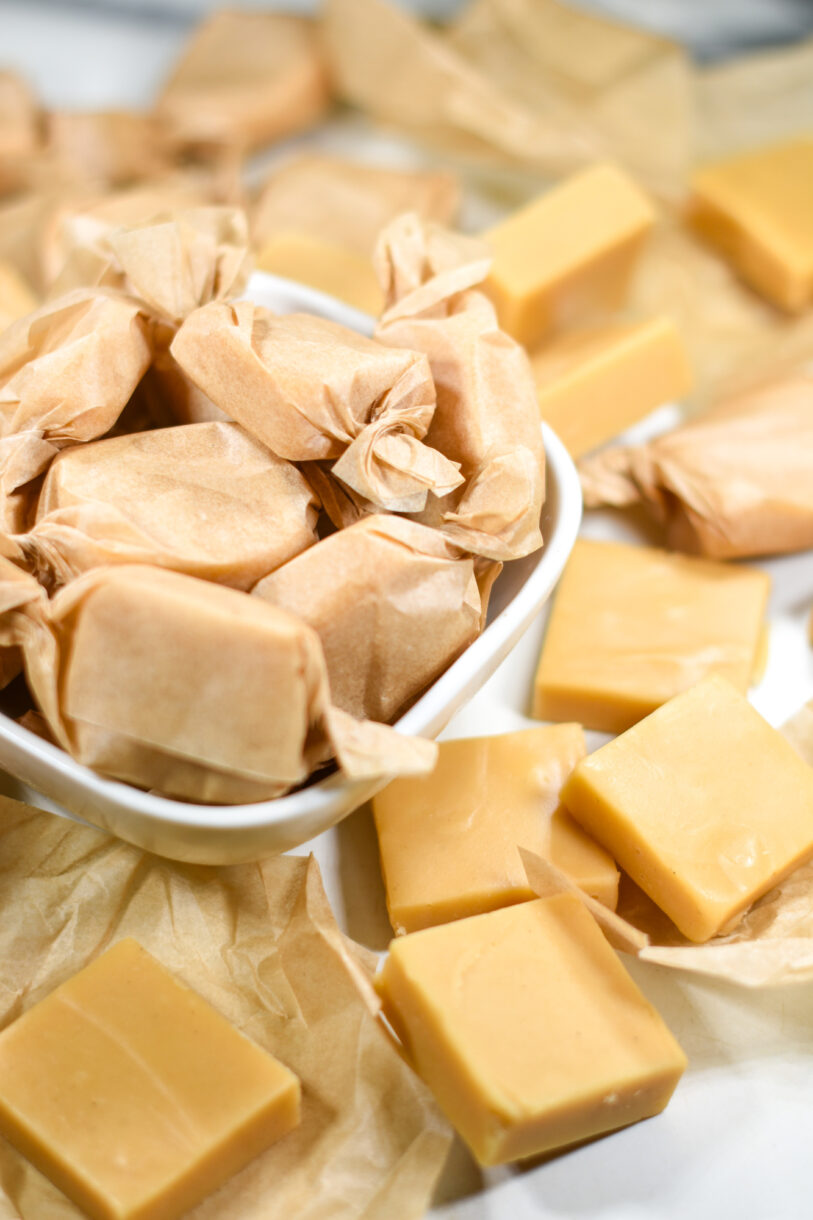
- Use pre-cut parchment. For gifting, wrap individual squares in parchment. I suggest buying pre-cut parchment wrappers to help speed the process along, but you can also cut your own squares from a roll of parchment.
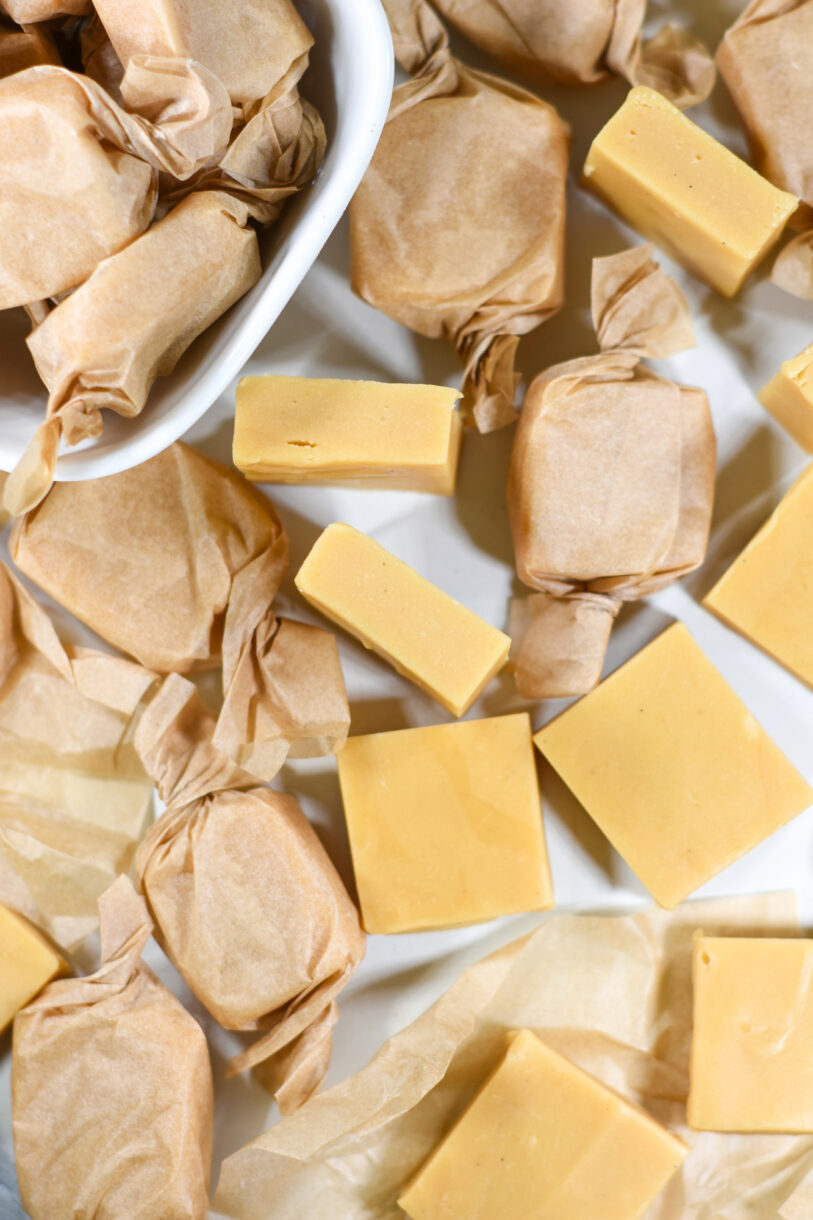

Clotted Cream Fudge
- Total Time2 hours, 30 minutes
- Yield36 1 1/4-inch squares 1x
A traditional British clotted cream fudge recipe made with clotted cream, golden syrup, and golden caster sugar. Delicious, easy to make, and ideal for gifting!
Ingredients
Butter or nonstick spray, for greasing tin
275 grams unrefined caster sugar, such as Billington’s golden caster sugar (1 1/4 cups + 2 tablespoons)
220 grams clotted cream (1 cup)
105 grams golden syrup (1/3 cup)
1 teaspoon vanilla bean paste
Pinch fine sea salt
Instructions
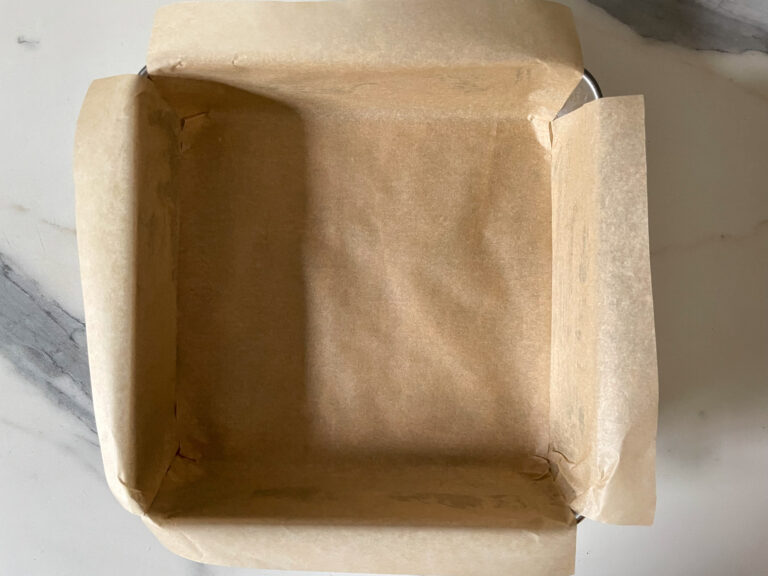
Line an 8×8-inch square tin with baking parchment in a criss-cross pattern, allowing a 1-inch overhang on all sides. Grease generously with butter or nonstick spray.
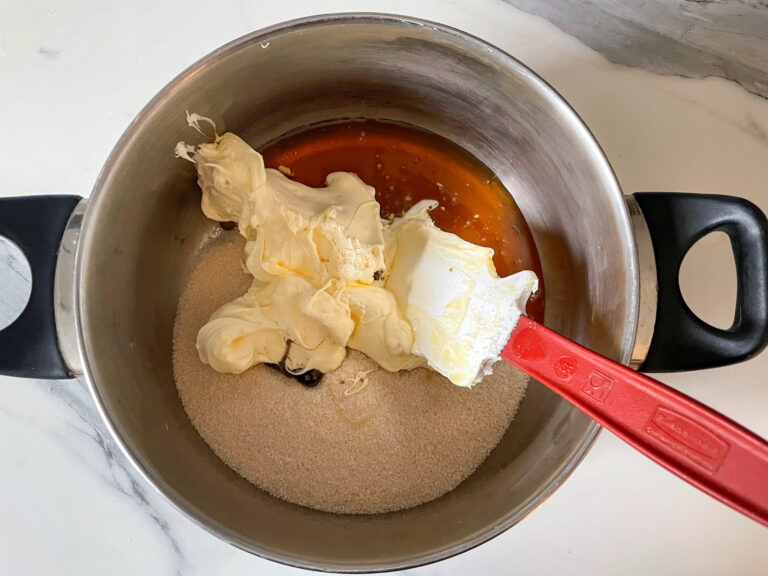
Combine the golden caster sugar, clotted cream, golden syrup, vanilla bean paste, and salt in a large metal saucepan or stock pot.
Cook over medium heat, stirring gently until everything dissolves.
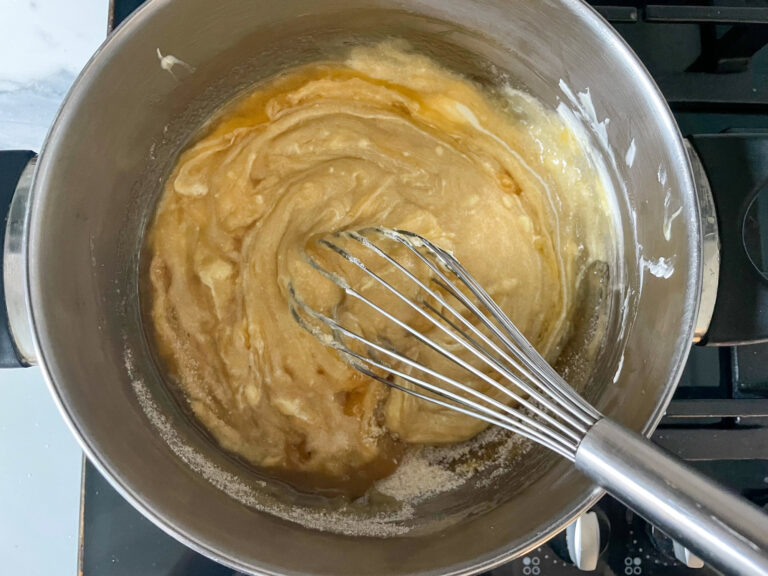
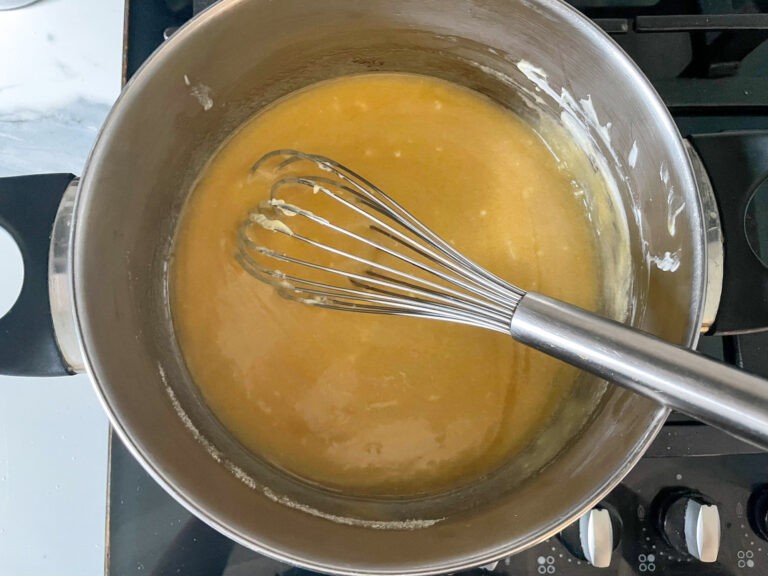
Bring to a low boil, then cover pan with a lid and boil for 3 minutes.
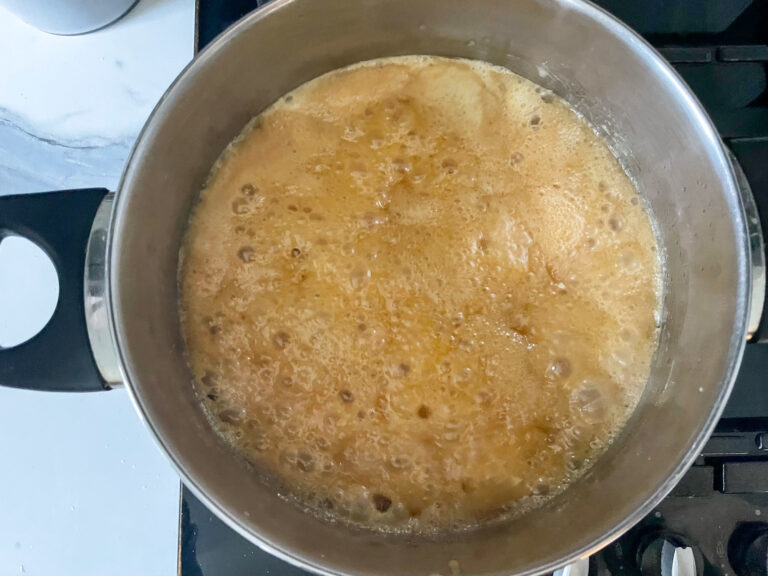
Remove the lid and continue boiling, without stirring, until the temperature reaches soft ball stage (about 240° F (116°C) on a digital thermometer.
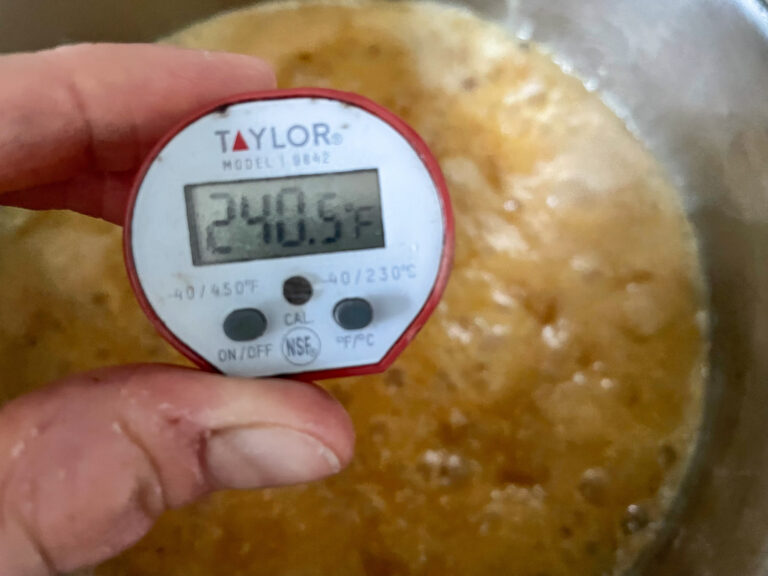
Remove from heat.
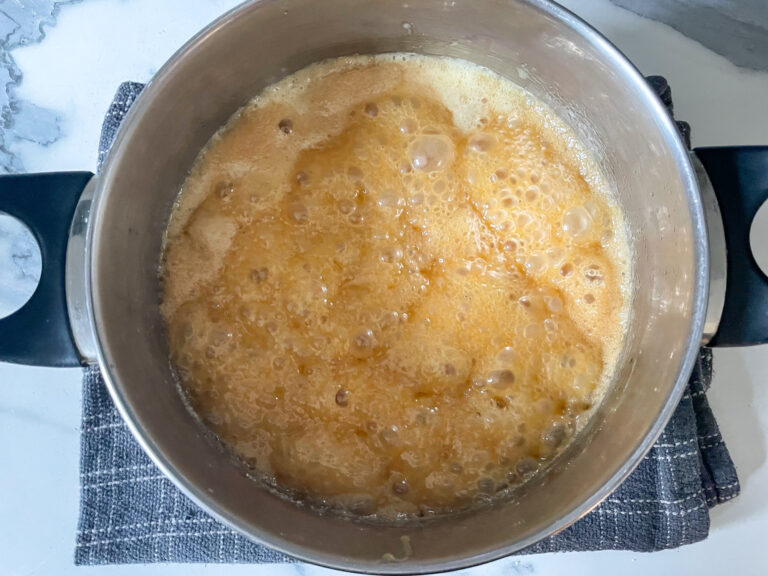
With a wire whisk, whisk until fudge turns thick and matte and and lightens in color, about 8-10 minutes. You will feel the mixture thicken as it cools.
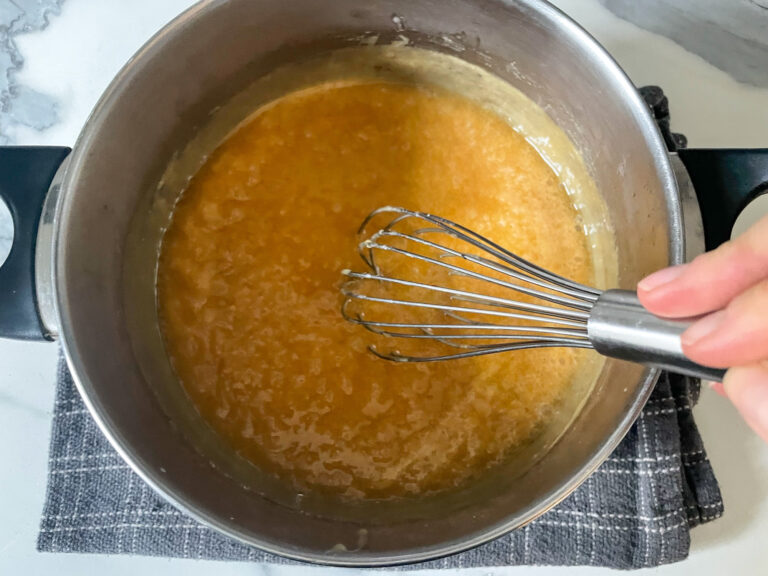
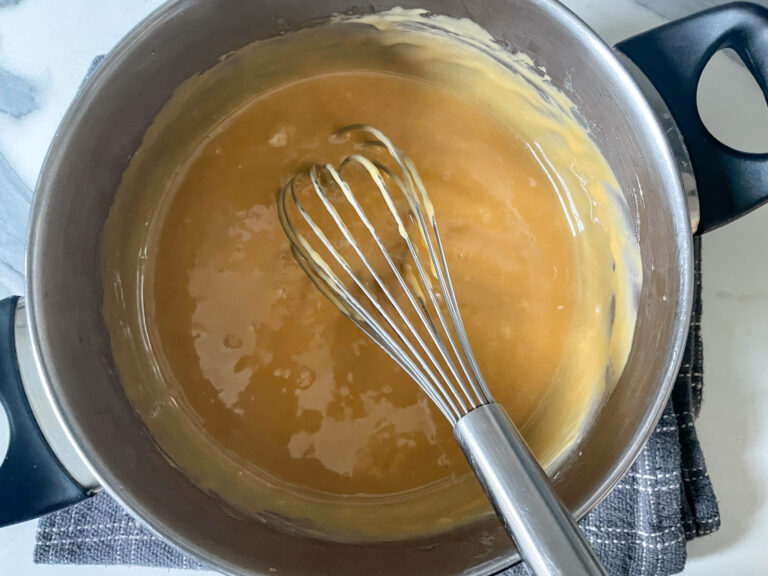
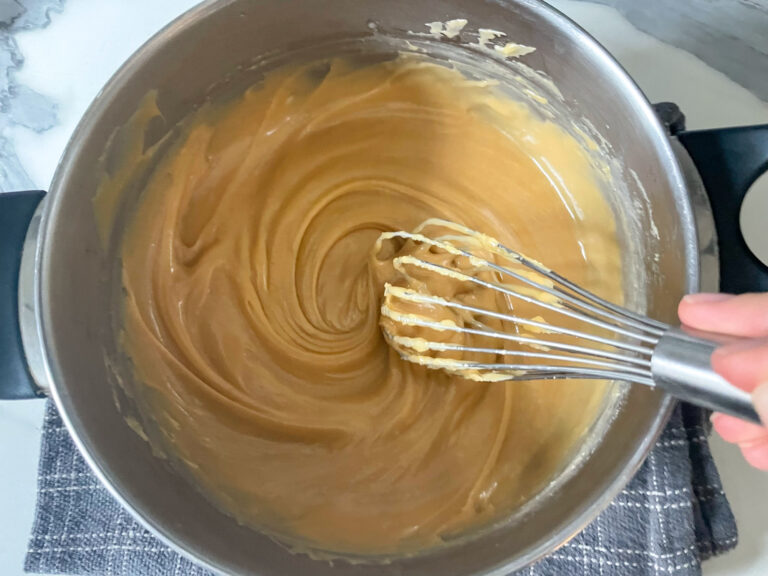
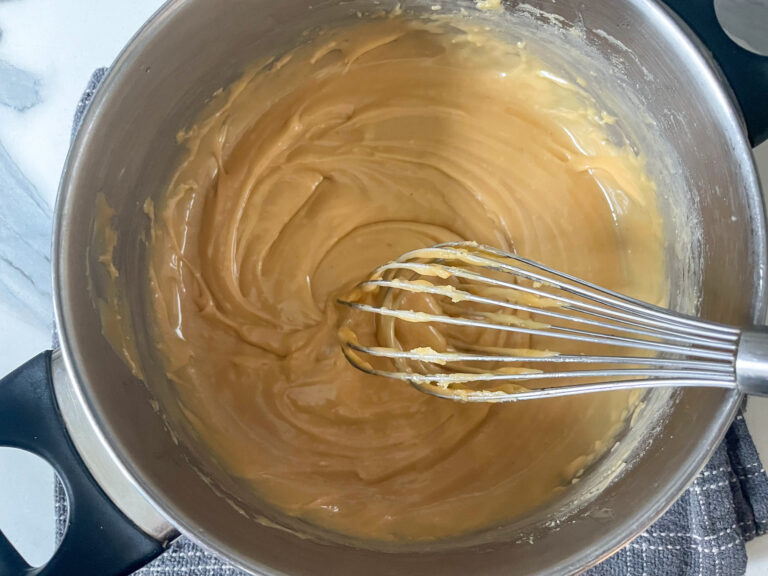
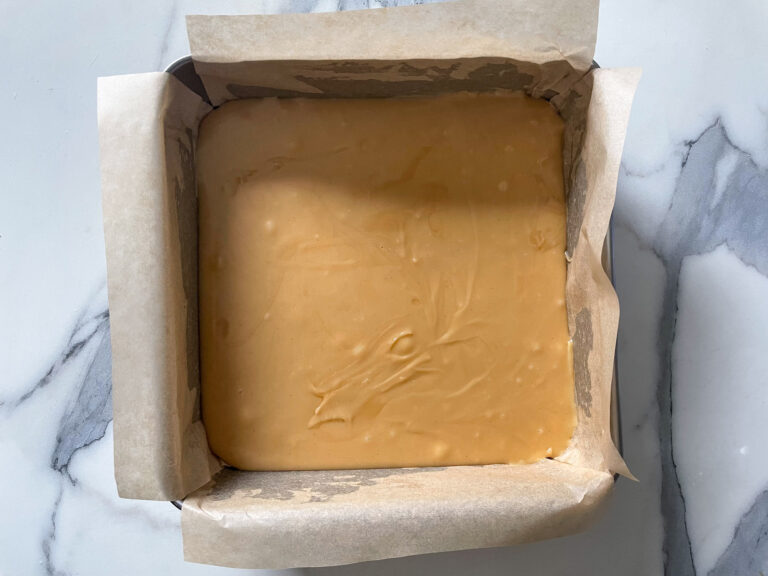
Pour into prepared tin.
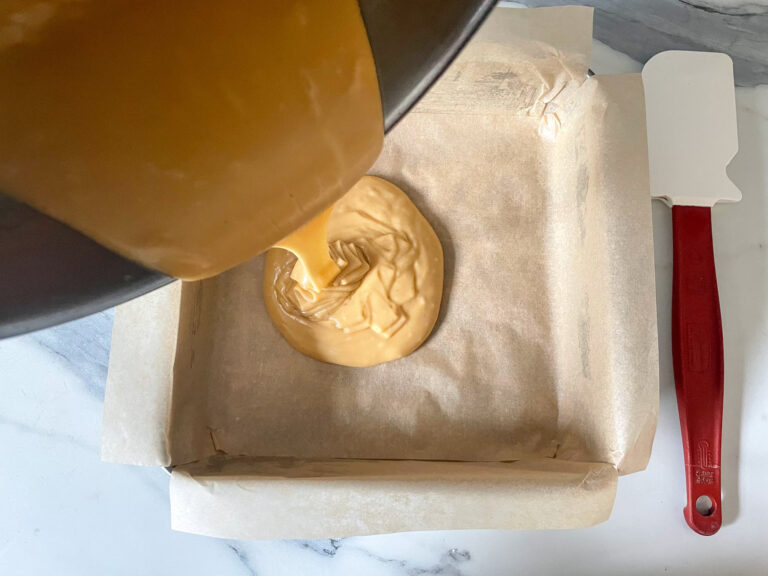
Allow to sit at room temperature, uncovered, for 1 1/2 – 2 hours, or until fudge sets and bottom of tin feels completely cool.
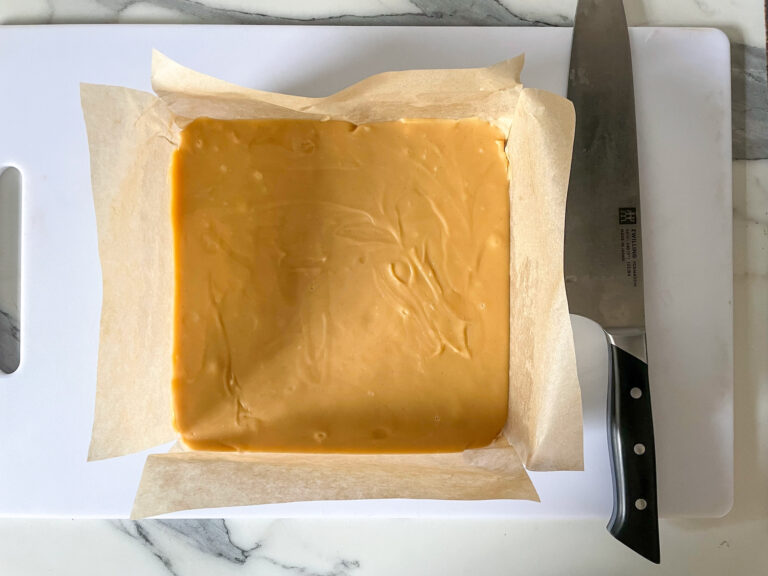
Lifting by the parchment, gently transfer fudge slab to a chopping board.
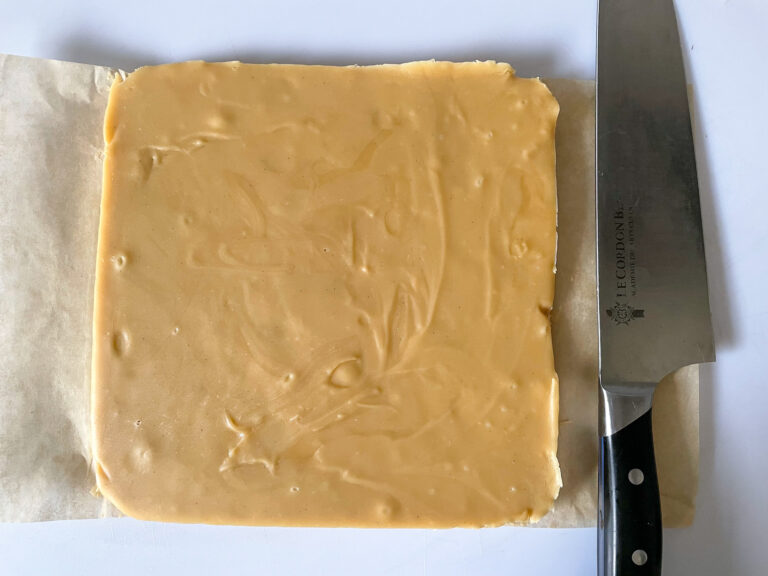
With a sharp chef’s knife, cut into squares. I cut mine into 6 rows of 6, for a total of 36 squares.
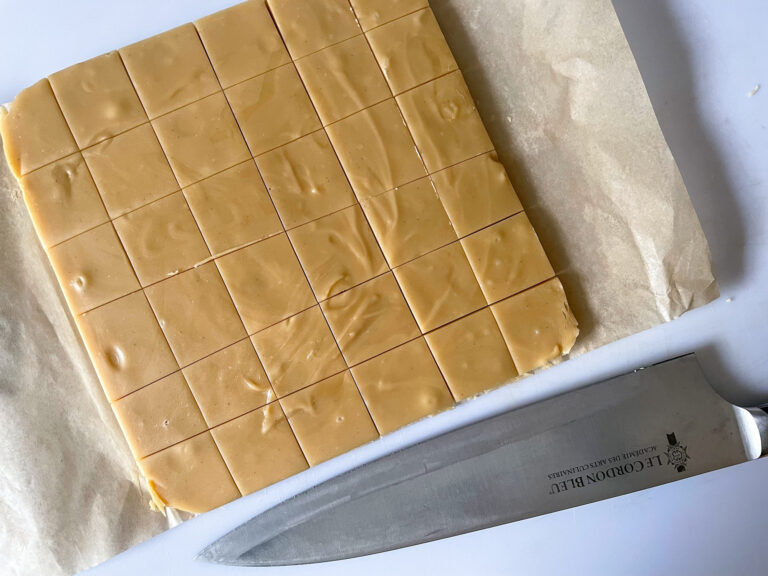
Wrap fudge in squares of parchment, or layer between sheets of parchment. Store in an airtight container at room temperature for up to 2 weeks.


Notes
You will need a candy thermometer for this recipe! My favorite is this waterproof digital thermometer by Taylor Precision Products.
Clotted cream fudge recipe loosely adapted from BBC Good Food and Rodda’s Clotted Cream.
- Prep Time: 20 minutes
- Setting Time: 2 hours
- Cook Time: 10 minutes
- Category: Candy and Confectionery
- Method: Stovetop
- Cuisine: British
Make-Ahead and Storage Suggestions
Fudge will keep for up to two weeks when stored in an airtight container between layers of wax paper or parchment. Be careful with where and how you store your clotted cream fudge. If placed in a cabinet next to foods with strong smells (onions, spices), the candy will absorb the tastes/odors of whatever is nearby. I made the mistake of storing my fudge next to a bag of coffee, and soon found myself with coffee-flavored fudge.
Other Candy Recipes You Might Enjoy
Old-Fashioned Hard Candy
Strawberry Marshmallows
Sea Salt Apple Cider Caramels
Tie-Dye Peppermints
And if you do make these, or any of my recipes, don’t forget to tag me @bastecutfold or use the hashtag #bastecutfold on Instagram. I always love to see what you’re making!








I have been tasked with making 200 pieces of clotted cream and strawberry fudge for a local charity, could I add freeze dried strawberries to the mix?
I haven’t tried adding freeze dried fruit, but I’d imagine it will work! Just make sure to only use freeze dried, and nothing wet, such as fresh fruit or jam. I’d also start with a small test batch first to make sure it works.
I’ve made this recipe many times and attempt to follow the instructions to the letter. Sometimes the fudge turns out smoother than other times when it is a little more grainy. It is still nice but I would like it to be smooth every time. I would appreciate any advice. Thanks
Hi Paul,
Grainy fudge can be caused by a couple of different things:
Over-agitation (stirring or excess swirling during the cooking process) can promote crystallisation, although it sounds like you aren’t doing this. You could try shortening the whisking step by a minute or two, as over-agitation at this stage could potentially contribute to crystallisation as well.
Overcooking/cooking to a too-high temperature is another possible cause. When I make any type of fudge, candy, or sweets, I often use two (and sometimes even three) thermometers to check the accuracy of my temps. That’s definitely something you could try.
I haven’t tested this, but another thing you might try is replacing a small portion of the golden syrup with liquid glucose or light corn syrup. Both of these inhibit the formation of sugar crystals, and perhaps would work better than golden syrup alone.
To some extent, though, I think grainy fudge is one of those things that sometimes just…happens, even to experienced chefs. I still occasionally have a batch that turns out that way, even when I’m doing everything “right!”
Hi is it a soft and smooth fuge im not a fan of crumbly or grainy fuge but I would like to give it a go looks nice
This is a British-style fudge, so it is a bit more on the crumbly side!
Made this with soft brown sugar and it came out as treacle toffee- cracked a tooth on it. Never again !
I’m sorry things didn’t go as expected. I’d definitely stick with caster sugar rather than brown sugar for this recipe. Also, it sounds like the temperature might’ve been an issue–if your sugar is cooked too long or at too high a temperature, it will turn into hard candy instead! Always keep a good, calibrated probe/thermometer nearby so you can check your temps along the way. For particularly finicky recipes, I actually double-check myself with two (and sometimes three) thermometers!