This post may contain affiliate links. Please read the disclosure policy to learn more.
Thank you for supporting this blog!
Guide to Different Types of Sugar
A guide to the different types of sugar most frequently found in baking and candymaking recipes. In the UK I use lots of caster sugar; when I’m baking in the US, I frequently adapt my recipes to rely more heavily on granulated sugar, since it’s much more readily accessible. Below I break down the names and functions of the types of sugars I use most often in my recipes, how they function, and how to substitute and adapt if you can’t find the type of sugar you need.
Granulated Sugar
Granulated sugar, also called white sugar, is the standard sugar used in American recipes. It provides sweetness, structure, and moisture, and aids in caramelization. When I’m in the US, I test most of my recipes with granulated sugar. Granulated sugar is available in the UK, but the grains are larger and coarser than their US counterparts, and it is not as widely used, with most recipes calling for caster sugar instead. For the most part I find that US granulated and UK caster sugar can be used interchangeably, but because the grains are not the same size I recommend using a scale to measure by weight, rather than relying on volume.
Caster Sugar
Caster sugar is a finely ground white sugar with crystals smaller than granulated sugar but larger than confectioner’s sugar (icing sugar). Caster sugar dissolves quickly, making it the go-to for meringues and macarons. The majority of British recipes call for caster sugar, and it’s also easier to find in the UK, so when I’m UK-based I test nearly all of my recipes with caster sugar. If you’re in the US and cannot find caster sugar, superfine sugar works best as a substitute. Or you can make your own caster sugar by pulsing granulated sugar briefly in a coffee grinder or a food processor.
Superfine Sugar
Superfine sugar is an extra-fine white sugar that dissolves almost instantly. In the United States, the terms “superfine sugar” and “caster sugar” are often used interchangeably, and the two types of sugar can be used accordingly.
Brown Sugar
Brown sugar (white sugar mixed with molasses) is a soft, moist sugar typically used in desserts like cookies, blondies, gingerbread, and other recipes where a caramel-like flavor is key. Brown sugar comes in two varieties: light brown sugar and dark brown sugar These can almost always be swapped for one another in an equal quantity, although dark brown sugar will give the finished product a stronger, more molasses-forward flavor and a slightly darker color.
Molasses Sugar
Molasses sugar is a type of sugar made by coating granulated sugar with molasses, similar to dark brown sugar but with a more pronounced molasses flavor. I was first introduced to molasses sugar in the UK, where it’s much more readily available than it is in the US. (Billington’s is my go-to brand.) In British baking, you’ll find molasses sugar in gingerbread, steamed puddings, and other recipes which showcase deep notes of caramel flavor. Dark brown sugar or muscovado sugar make reasonable substitutes for molasses sugar.
Confectioner’s Sugar (Icing Sugar, Powdered Sugar)
Confectioner’s sugar, also called powdered sugar or 10X sugar in the US, or icing sugar in the UK, is a type of sugar which has been finely ground and blended with cornstarch to prevent clumping. I use this powdery, snowy-white sugar for everything from buttercream frostings to macaron batters to sweetening homemade whipped cream. It’s also great for dusting over slices of cake or pie as a pretty finishing touch. Note that confectioner’s sugar does not typically work as a substitute for granulated or caster sugar, because the added cornstarch and powdery consistency will affect the texture of the final bake.
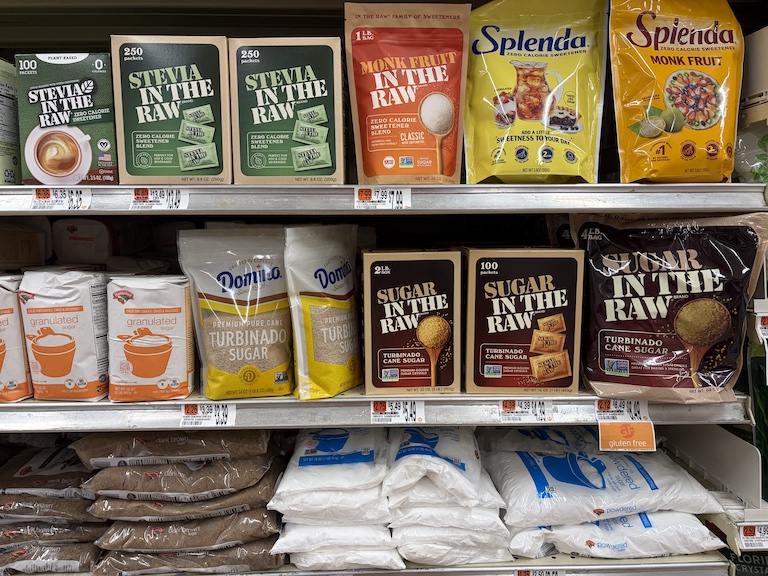
Demerara Sugar, Turbinado Sugar, and Sugar in the Raw
Demerara sugar is a minimally refined cane sugar with large, light golden-brown crystals and a hint of toffee flavor. I absolutely love using Demerara sugar as a sparkly, crunchy finishing touch for baked goods like galettes, muffins, and shortbread biscuits.
Turbinado sugar is a similar, partially refined cane sugar, and will work interchangeably with Demerara sugar in most recipes. (Turbinado sugar is sold under the brand name “Sugar in the Raw,” and you’ll frequently spot it in little brown packets at your local coffee shop, because it’s also great for stirring into tea or coffee!) Avoid using coarse sugars like Demerara and Turbinado in baking recipes that require the sugar to dissolve; these don’t dissolve as smoothly as fine-grained sugars like caster or granulated sugar
Flavored Sugars
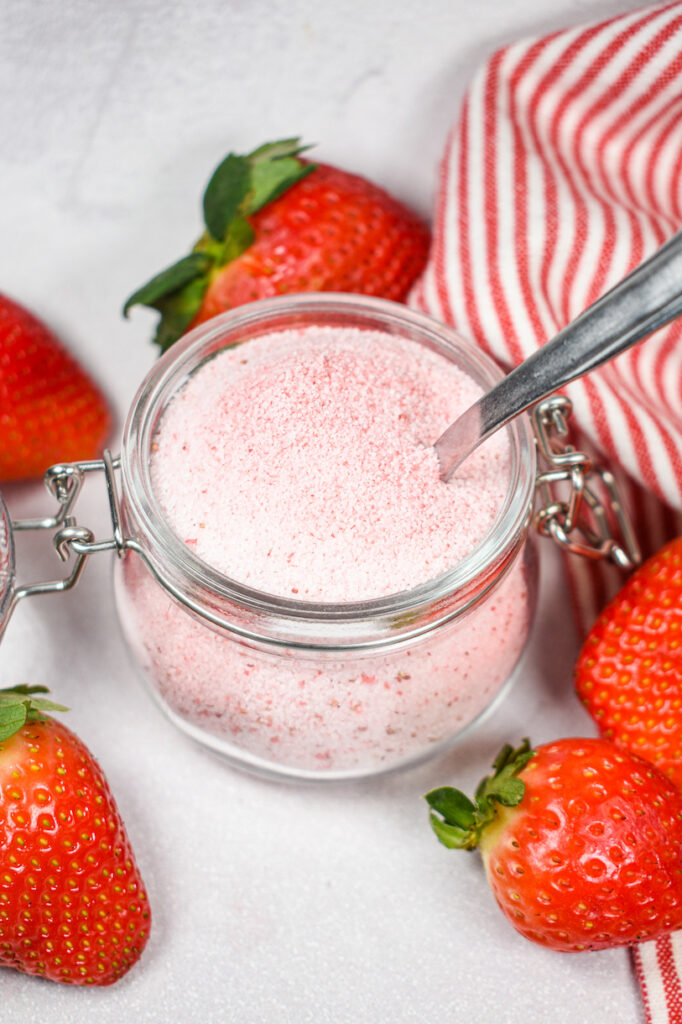
I occasionally create recipes for flavored sugars, like this homemade strawberry sugar. Flavored sugars work nicely for gifting, or for applications where you want to impart additional flavor into the finished product. I also enjoy using these in lieu of salt for dipping the rims of cocktail glasses. You can make your own flavored sugars using freeze-dried fruit and a food processor, or purchase commercially-made flavored sugars.
Muscovado Sugar
Muscovado sugar is an unrefined cane sugar with a high molasses content, a moist texture, and a strong, complex flavor. Like molasses sugar, I find muscovado sugar much more readily accessible in the UK, where you’ll find it in recipes for bakes like gingerbread loaves or bara brith. Light or dark brown sugar will both serve as effective replacements for muscovado sugar.

Rebecca Frey is a freelance recipe developer, food writer, photographer, stylist, and pastry chef. She earned the Diplôme de Pâtisserie (French Pastry Techniques Diploma) from Le Cordon Bleu London in 2020 and an MSc in Culinary Innovation from Birkbeck, University of London in 2022, where she focused her dissertation research on Pennsylvania Dutch recipes. She also holds a Professional Chocolatier’s Certificate from Ecole Chocolat. Rebecca has developed recipes for websites including Serious Eats, The Spruce Eats, Wine Enthusiast, and others. Follow her on Instagram @bastecutfold.