This post may contain affiliate links. Please read the disclosure policy to learn more.
Thank you for supporting this blog!
Guide to Different Types of Flour (Including US to UK Conversions)
Having lived, worked, and baked in both the US and UK, I’ve grown adept at “translating” recipe and ingredient lists between British and American bakes. I developed this guide to the different types of flour commonly used in baking and pastry, including substitutions and conversions for British versus American recipes, to help bakers learn which flours will work best for different projects, and what to substitute if you can’t find the flour specified in the recipe.
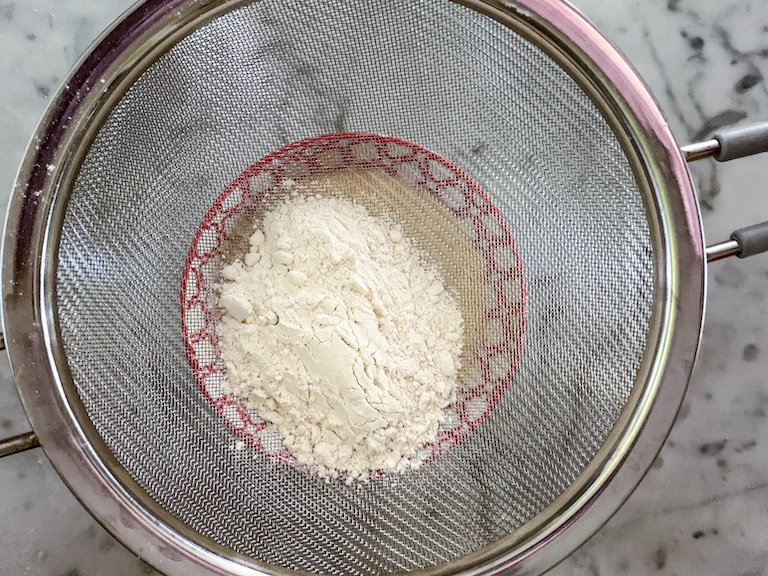
All Purpose Flour
American all-purpose flour is a medium-protein wheat flour containing about 10-12% protein and used to make a wide range of baked goods, including cakes, muffins, and pie crusts, as well as for thickening soups and sauces. In the US, if a recipe simply calls for “flour,” it almost certainly means all-purpose.
Plain Flour
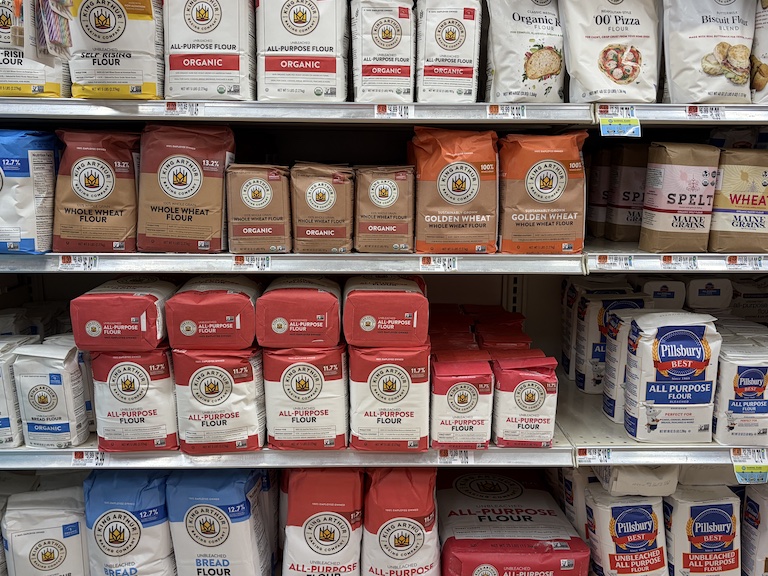
Plain flour is a standard white flour found throughout the UK, and used for many of the same applications (cupcakes, brownies) as American all-purpose flour. For UK bakers, plain flour makes the best substitute for recipes requiring all-purpose flour, despite its slightly lower protein content. When I’m making American recipes in England, I use McDougall’s plain flour in the red-and-white striped bag, which contains 10.4% protein—I find this to be the best replacement for American brands like Gold Medal and Pillsbury, which both have around 10.5% protein. If making an American recipe I typically avoid British supermarket brands, which are lower in protein than AP flour. For example, Sainsbury’s own brand contains only 9.7% protein.
Pastry Flour
Pastry flour is a finely milled wheat flour with a protein content of about 8-9%, placing it somewhere in between cake flour and American all-purpose flour. Pastry flour works especially well for pie crusts, as well as pastries which require a tender, delicate crumb. I rarely specify pastry flour in my recipes, typically relying on all-purpose or plain flour instead. However, a blend of all-purpose flour and cake flour can provide a good substitute if you do come across a recipe requiring pastry flour and don’t have a bag in the cabinet.
Whole Wheat Flour
Whole wheat flour is a type of flour milled from the entire wheat kernel, including the bran, germ, and endosperm. It is darker in color than all-purpose flour, with a higher fiber content and a nuttier flavor. Whole wheat flour absorbs more liquid and develops gluten differently than AP or bread flour, so I caution against using it by itself, or replacing all of the white flour in a recipe with whole wheat. In recipes where I use whole wheat flour (like my honey wheat pizza crust) I typically blend it with another flour; otherwise, straight whole wheat flour tends to produce very dense, breads and baked goods. While whole wheat flour can often replace part of the white flour in recipes, substituting it entirely requires more in-depth recipe adjustments.
Self Rising (Self Raising) Flour
Self-rising flour (U.S.) or self-raising flour (UK) is flour that has baking powder (bicarb of soda) and salt already blended into it. It typically starts with lower-protein flour (about 8-10%), making it especially well suited to American biscuits and British scones, as well as “quick” recipes like breads and mug cakes. Self-rising and self-raising flours aren’t exactly the same (the US “self-rising” version typically contains salt, while British “self-raising” does not) but can be used interchangeably. Do not substitute self-rising flour in recipes calling for plain or AP flour. If you do not have self-rising flour, you can make your own by combining plain or all-purpose flour with baking powder (bicarb of soda) and salt.
Bread Flour
Bread flour is a high-protein flour containing roughly 12-14% protein. The higher protein content promotes strong gluten development, resulting in chewy, well-structured breads. Bread flour is the best choice for yeast-raised breads, pizza doughs, and bagels. (In the UK, Allinson’s bread flour (12% protein) lands somewhere in between American King Arthur all-purpose flour (11.7% protein) and King Arthur bread flour, at 12.7% protein.) All-purpose flour or plain flour makes a decent replacement for bread flour, although the finished bread may have a slightly softer, less chewy texture. I often make my breads and pizza doughs using a blend of equal parts bread flour and all-purpose flour.
Cake Flour
Cake flour is a soft, low-protein flour. With just 7-9% protein, it produces very tender cakes and cupcakes with a fine, delicate crumb. Cake flour is not ideal for breads, cookies, or pie crusts because it develops very little gluten; I generally do not recommend swapping in cake flour for AP. If you’re in the UK or another country where cake flour is not widely available, plain flour mixed with a small amount of cornflour is a common substitute, but not an exact match. I’d recommend sourcing imported cake flour from Amazon, or visiting a specialty grocer like Partridge’s in London instead.
Gluten Free Flour
Gluten-free flour contains naturally gluten-free grains and starches like rice flour, potato starch, tapioca starch, sorghum flour, and xanthan gum. Most commercial “measure-for-measure” blends, such as King Arthur (my go-to for gluten free baking) are designed to replace all-purpose flour without additional modifications, but your mileage may vary.
Because formulations differ, gluten-free flour blends are generally not interchangeable. I don’t recommend replacing the AP flour in my recipes with gluten-free flour, as I have not tested them this way. Instead, I suggest making a naturally gluten free dessert (like my flourless orange almond cake), or sourcing a recipe from one of the many bloggers and cookbook authors who specialize in gluten-free bakes.
Almond Flour (and Other Nut Flours)
Made from finely ground blanched almonds, almond flour contains plenty of fat, protein, and moisture, but zero gluten. It’s a key ingredient in traditional French macarons. Other nut flours, such as hazelnut, pistachio, pecan, or walnut flour, are similarly ground flours, but with different nutty flavors. Nut flours (or other flours, like coconut or oat) cannot usually replace wheat flour one-for-one in baking and pastry recipes because they do not contain gluten.
Cornflour
Cornflour is not really flour at all. However, I’m including it here because it’s an important ingredient in many of my recipes, and because the name can be misleading! Cornflour is the British term for cornstarch, a finely milled starch extracted from corn. I mostly use cornflour/cornstarch to thicken my puddings, pie fillings, custards, and pastry creams, but will sometimes add it to baked goods (like black and white cookies) to create an ultra-tender crumb. In the US, cornflour is very different from cornmeal (the bright yellow, finely ground whole corn used for making cornbread), so do not confuse or swap the two!

Rebecca Frey is a freelance recipe developer, food writer, photographer, stylist, and pastry chef. She earned the Diplôme de Pâtisserie (French Pastry Techniques Diploma) from Le Cordon Bleu London in 2020 and an MSc in Culinary Innovation from Birkbeck, University of London in 2022, where she focused her dissertation research on Pennsylvania Dutch recipes. She also holds a Professional Chocolatier’s Certificate from Ecole Chocolat. Rebecca has developed recipes for websites including Serious Eats, The Spruce Eats, Wine Enthusiast, and others. Follow her on Instagram @bastecutfold.