This post may contain affiliate links. Please read the disclosure policy to learn more.
Thank you for supporting this blog!
Guide to Different Types of Chocolate
As a pastry chef, recipe developer, and chocolatier, I spend lots of time working with chocolate. Because different types of chocolate are best suited to different projects, I created this guide to the chocolates (including couverture, chocolate chips, candy melts, and cocoa powder) commonly used in baking and candymaking, to help home cooks learn which chocolates will work best for their needs.
Dark Chocolate
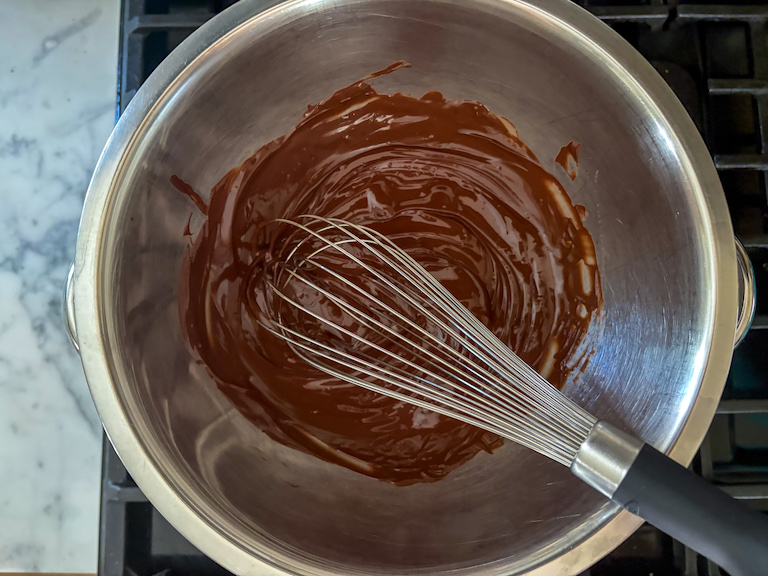
Dark chocolate contains cocoa solids, cocoa butter, and sugar, with no milk solids. Legally, dark chocolates must contain at least 18% cocoa butter and 35% cocoa solids, but most commercial dark chocolates contain at least 50% cocoa solids, and usually more. The higher the percentage, the darker (and less sweet) the chocolate. For recipe testing, my go-to dark chocolate is Callebaut 54.5%. To temper (the process of heating and cooling couverture chocolate to specific temperatures to create a signature “shine” and “snap”) for molded bars and bonbons, I like Guittard’s Lustrous 55%, and Valrhona’s Manjari 64% and Guanjana 70%.
Milk Chocolate
Milk chocolate contains cocoa solids, cocoa butter, sugar, and milk solids, with cocoa percentages typically ranging from 30-45%. The sweeter flavor and creamier texture of milk chocolate make it popular for desserts and chocolate treats like s’mores, chocolate cherries, or homemade Mallo cups. Couverture milk chocolate works best for tempering and enrobing because of its higher cocoa butter content. My favorite milk chocolates for tempering include Callebaut 33.6%, Valrhona Jivara 40%, and Guittard Eclipse du Soleil 41%.
White Chocolate
White chocolate contains cocoa butter, sugar, milk solids, and vanilla, but no cocoa solids. Because it relies on cocoa butter to create the creamy texture, look for a white chocolate which contains at least 20% cocoa butter. Couvertures like Guittard Creme Francaise 31%, Valrhona Ivoire 31%, and Callebaut 28% are some of my favorites for tempering and enrobing. Note that you’ll need to be especially careful when melting white chocolate; it burns very easily.
Blonde Chocolate
Blonde chocolates, like Valrhona’s Dulcey 35% and Callebaut Gold 30.4%, are caramelized chocolates made by heating white chocolate until the sugars and milk solids turn golden brown, creating chocolate with a toasted flavor reminiscent of toffee or caramel. Blonde chocolate makes a lovely ganache for filling bon-bons or rolling into truffles. Or, chop the couverture into pieces and fold it into blondie batter or cookie dough as a replacement for white chocolate chips.
Ruby Chocolate
Ruby chocolate, or the “fourth” chocolate, is a Callebaut product made from ruby cocoa beans. This unique chocolate features a naturally pink color and a tart, fruity, berry-like flavor that pairs especially well with raspberries or strawberries. I like to use ruby chocolate for ganache fillings, and in baked goods like cookies and blondies. When tempering, I use the same temperature ranges for ruby that I’d use for milk chocolate.
Fruit Couvertures
A few of my recipes, like my dark chocolate and passionfruit cookies, call for couvertures from Valrhona’s Inspiration line. These colorful, brightly flavored feves come in flavors like almond, matcha, yuzu, and strawberry. I find the Inspiration products best for making ganaches, cakes, and cookies, rather than tempered chocolate applications. I don’t use fruit couvertures often because they’re expensive and have a limited range of use, but they’re fun to experiment with if you have the chance.
Chocolate Chips
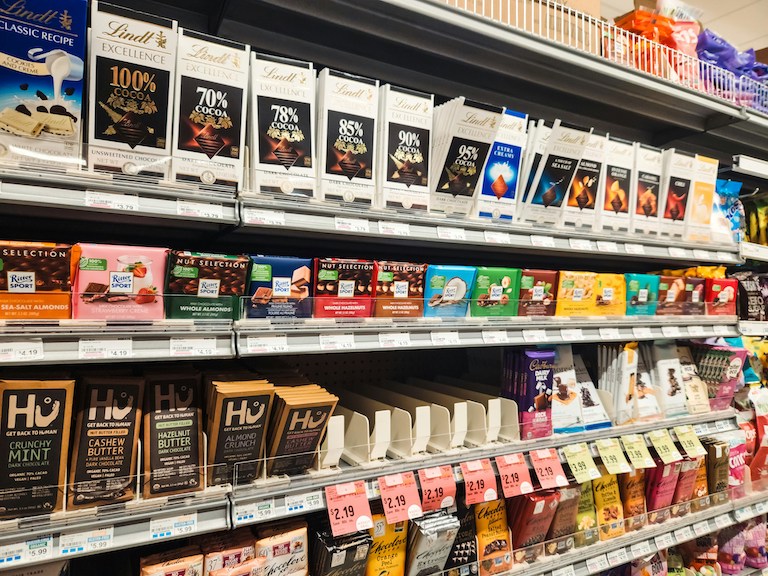
Chocolate chips sold in the baking aisle at the supermarket contain stabilizers and emulsifiers that make them better-suited for baked goods like cookies and muffins than for melting, tempering, enrobing, or making silky-smooth hot chocolates and homemade ganaches. While you can substitute chopped couverture for chocolate chips in baking recipes, I don’t recommend the reverse. For chocolate-forward recipes, use couverture from a supplier like Guittard, Callebaut, Valrhona, or Cacao Barry, or a better-quality supermarket brand, such as Lindt or Ghirardelli. In addition to ease of melting and tempering, the superior taste and texture of good-quality couverture chocolate make it a worthwhile investment.
Baker’s Chocolate
Baker’s chocolate is a bar-style product designed for baking rather than eating. It comes in bittersweet and unsweetened (100% cacao) varieties, and Baker’s is the most widely recognized American brand. I almost never call for baker’s chocolate in my recipes; for bittersweet chocolate I recommend dark couverture chocolate or semi-sweet chocolate chips (depending on the application), while for unsweetened applications, I typically turn to unsweetened cocoa powder.
Candy Melts (Confectionery Coating)
Confectionery coating (also known by a range of other names including candy melts, candy wafers, and compound chocolate) is a product made from vegetable fat rather than cocoa butter. Candy melts come in a range of color and flavor options, and are easily purchased from a craft store or cake decorating shop.
Candy melts lack the flavor and superior quality of couverture chocolate, but because they do not require tempering, they’re a good option for novice bakers or days when you just need a shortcut. Candy melts set quickly at room temperature, so they’re ideal for cake pops, drizzles, piped shapes, and chocolate-covered treats. Confectionery coating is not a good replacement for real chocolate. Do not use candy melts for bars, molded chocolate bon-bons, or other applications where chocolate represents the primary flavor; for these, choose a quality couverture like the ones suggested above.
Unsweetened Cocoa Powder
Made by removing most of the cocoa butter from chocolate liquor and grinding the remaining cocoa solids into a fine powder, the concentrated chocolate flavor of unsweetened cocoa powder makes it ideal for cakes and cupcakes; brownies; and chocolate cookies; as well as chocolate buttercream frostings, and homemade hot cocoa blends. Natural cocoa powder is acidic and often paired with baking soda (the two work together to create a chemical reaction that helps baked goods to rise), so it is not a suitable substitute for Dutch processed cocoa powder.
Dutch Processed Cocoa Powder
Dutch processed cocoa powder is a type of cocoa powder that has been treated with an alkaline solution to neutralize its acidity. It is darker in color, with a milder, smoother flavor than standard unsweetened cocoa powder. I rarely use Dutch processed cocoa powder in my recipes. Unless the recipe specifically calls for Dutch processed cocoa, stick with unsweetened cocoa powder instead.
Hot Cocoa Mix
Hot cocoa mix is a beverage mix containing unsweetened cocoa powder and sugar, usually along with other ingredients like dry milk powder. It is designed for making hot chocolate rather than for baking. If a recipe calls for cocoa powder, hot cocoa mix is generally not a suitable substitute. And the flip side is also true! If a recipe specifies hot cocoa mix (like my hot chocolate dip recipe) don’t replace it with unsweetened cocoa powder, or your finished product will not be nearly sweet enough.

Rebecca Frey is a freelance recipe developer, food writer, photographer, stylist, and pastry chef. She earned the Diplôme de Pâtisserie (French Pastry Techniques Diploma) from Le Cordon Bleu London in 2020 and an MSc in Culinary Innovation from Birkbeck, University of London in 2022, where she focused her dissertation research on Pennsylvania Dutch recipes. She also holds a Professional Chocolatier’s Certificate from Ecole Chocolat. Rebecca has developed recipes for websites including Serious Eats, The Spruce Eats, Wine Enthusiast, and others. Follow her on Instagram @bastecutfold.