Rosemary Sea Salt Caramels
This post may contain affiliate links. Please read the disclosure policy to learn more.
Thank you for supporting this blog!
Chewy rosemary sea salt caramels made from granulated sugar, butter, and rosemary-infused whipping cream, finished with a generous sprinkling of sea salt. Wrapped in squares of parchment, these rosemary sea salt caramels work nicely for autumn and winter gifting, and will keep at room temperature for several weeks.
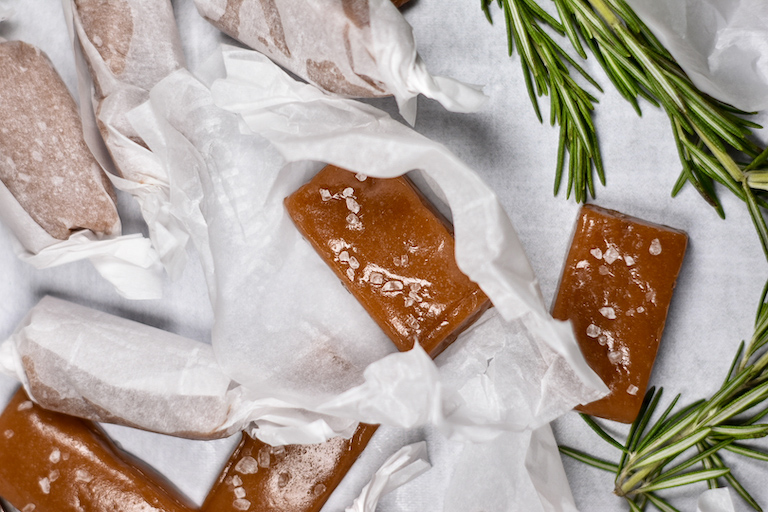
Infusing teas, herbs, and spices into whipping cream is one of my favorite culinary techniques and one I use often, imparting Earl Grey tea into white chocolate ganache; ginger into whipped cream; basil into coconut truffles; gingerbread spices into hot chocolate; and lavender into dark chocolate cookies. To flavor these rosemary sea salt caramels, I’ve used the same technique to add piney notes of fresh rosemary to whipping cream. Then, I’ve combined the rosemary-infused cream with granulated sugar, unsalted butter, corn syrup, and sea salt (plus a few drops of food grade rosemary oil) to create rosemary caramels that are equal parts herbal, salty, and sweet.

Key Ingredients
- Fresh Rosemary – You’ll need 2-3 sprigs of fresh rosemary, each about 6 inches long. For maximum flavor, choose rosemary clipped directly from a plant rather than the kind sold in a plastic package. Do not use dried rosemary; it won’t impart enough flavor and will be impossible to separate from the cream. If you have a few sprigs of fresh rosemary left over, save them to make sugared rosemary, or to decorate a loaf of rosemary focaccia.
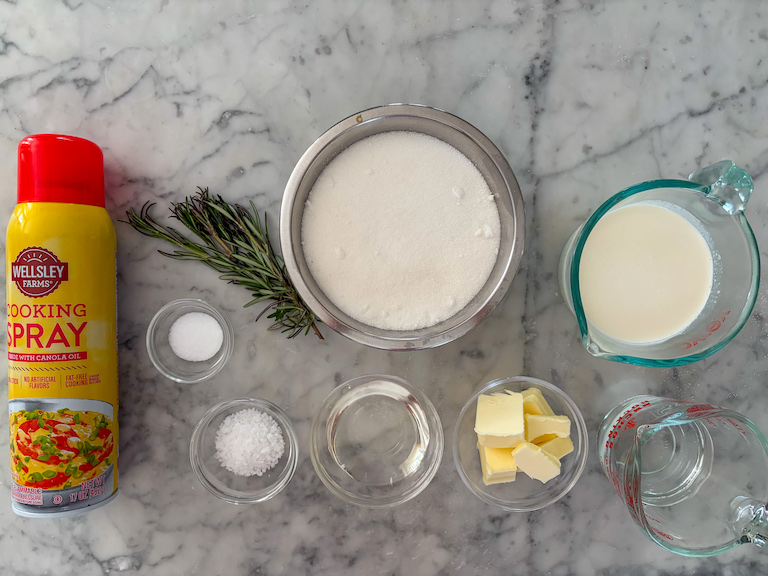
- Corn Syrup – Corn syrup prevents the caramels from crystallizing or becoming grainy. I prefer to work with Golden Barrel corn syrup for its superior texture. (I also like that it’s sold in large jars, which is helpful if you’re making big batches of caramels for holiday gifting. Webstaurant Store is my go-to for buying in bulk.) If you don’t have access to corn syrup, you can substitute liquid glucose or another invert sugar instead.
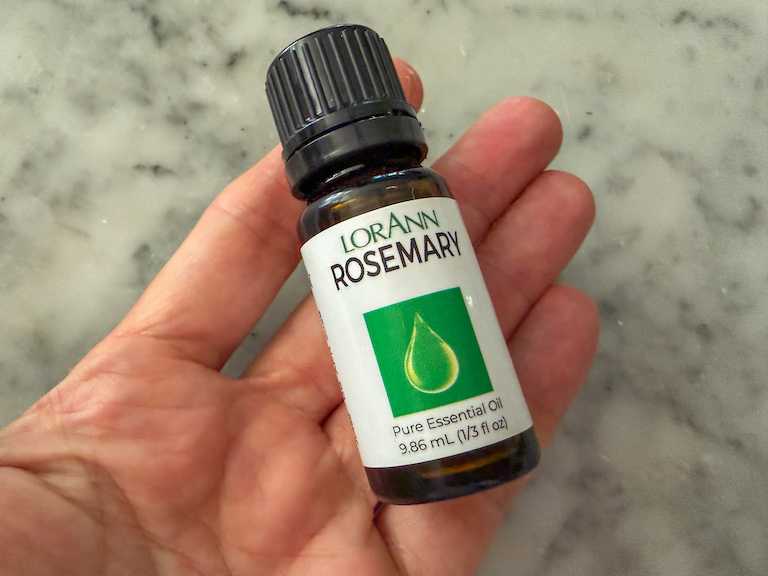
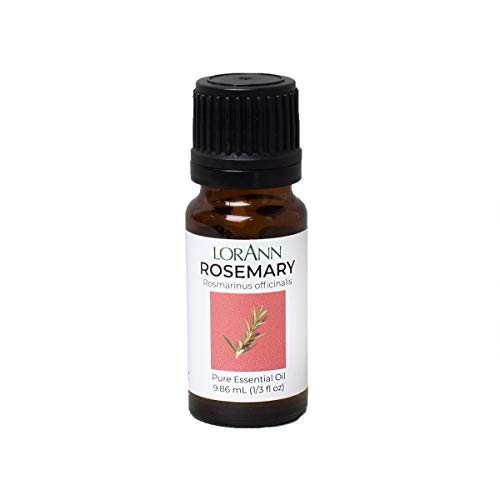
- Rosemary Oil – When selecting a rosemary oil, look for a product labelled pure, culinary, food-grade, or food-safe. (Some oils are designed for their fragrance or intended for topical use only, and are not safe for human consumption, so read the label carefully.) It will come in a small bottle, usually with a dropper. Do not use rosemary-infused olive oil like you’d use for making pizza or rosemary focaccia. I tested these caramels with LorAnn Oils natural rosemary oil.
Noteworthy Tools
- Digital Thermometer – I do not recommend making this recipe without a good digital thermometer. I often use two, or sometimes even three thermometers for candymaking, so I can triple-check my temperatures. Caramel-making requires precision—undercook, and you’ll make caramel sauce. Overcook, and you’ll make brittle!
- Baking Parchment – For removal purposes, you absolutely must line your tin with parchment. No exceptions. You will also need parchment to individually wrap the finished caramels. You can buy parchment squares specifically designed for wrapping homemade candies (I usually buy these for a quick shortcut), or cut your own from a roll of parchment. Do not use wax paper for any of the above! It will adhere to the caramel and be a nightmare to remove.
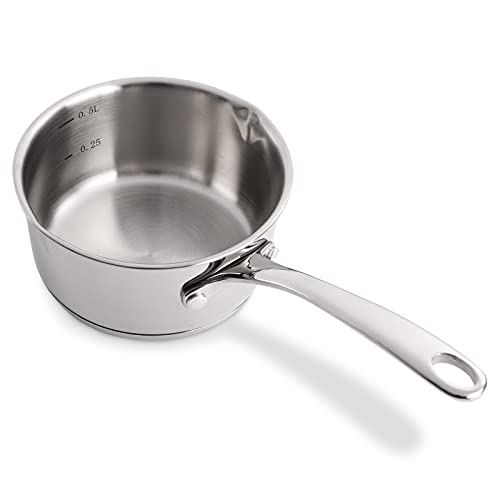
- Stainless Steel Pan – You’ll also need a large, heavy-bottomed stock pot for cooking the caramel syrup. Do not use a nonstick pan. (It’s best to avoid nonstick coatings when cooking sugar; high heat can ruin or discolor the coating). Choose a pan slightly bigger than you think you’ll need, to prevent the the caramel from bubbling over when you add the whipping cream.
Rosemary Sea Salt Caramels
- Total Time1 hour, plus cooling time
- Yield40 caramels 1x
Chewy rosemary sea salt caramels made from granulated sugar, butter, and rosemary-infused whipping cream, finished with a generous sprinkling of coarse sea salt.
Ingredients
Nonstick spray, for greasing tin
240 milliliters whipping cream (1 cup)
70 grams unsalted butter (5 tablespoons)
2 6-inch sprigs fresh rosemary
6 grams fine sea salt (1 teaspoon)
400 grams granulated sugar (2 cups)
60 grams light corn syrup (3 tablespoons)
80 milliliters water (1/3 cup)
1-2 drops pure food grade rosemary oil (see notes)
Coarse sea salt or flaky sea salt, for sprinkling
Instructions
Line an 8 x 8-inch square baking tin with parchment, allowing a 1-inch overhang on all sides. Spray with nonstick spray.
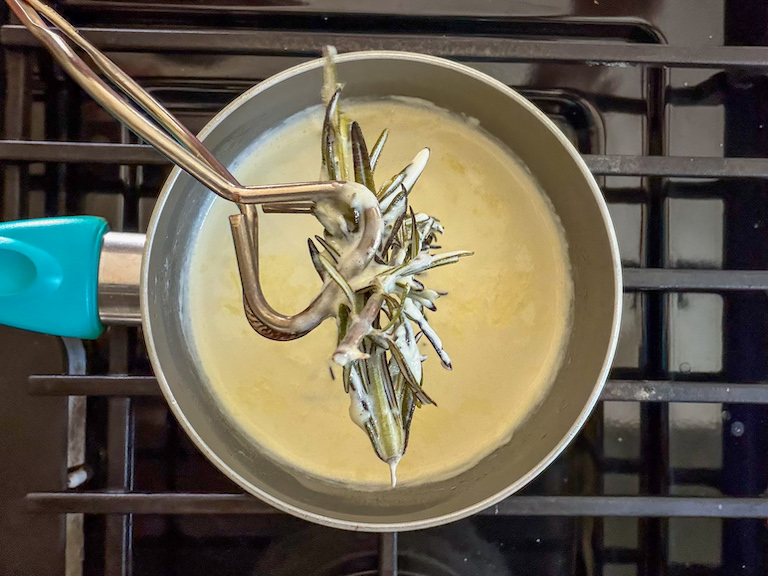
In a small saucepan, warm whipping cream and rosemary sprigs. Remove from heat and infuse for 20 minutes. With kitchen tongs, remove the rosemary.
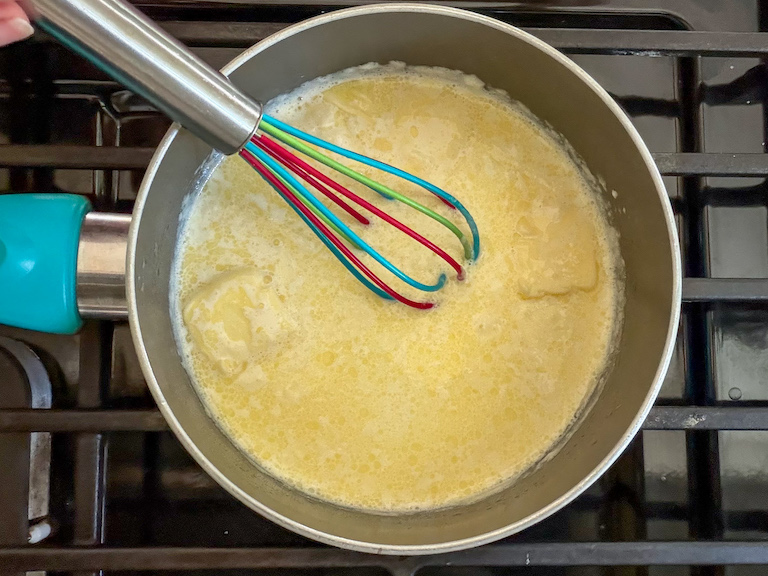
Rewarm cream over low heat. Add butter and fine sea salt, stirring until the butter melts.
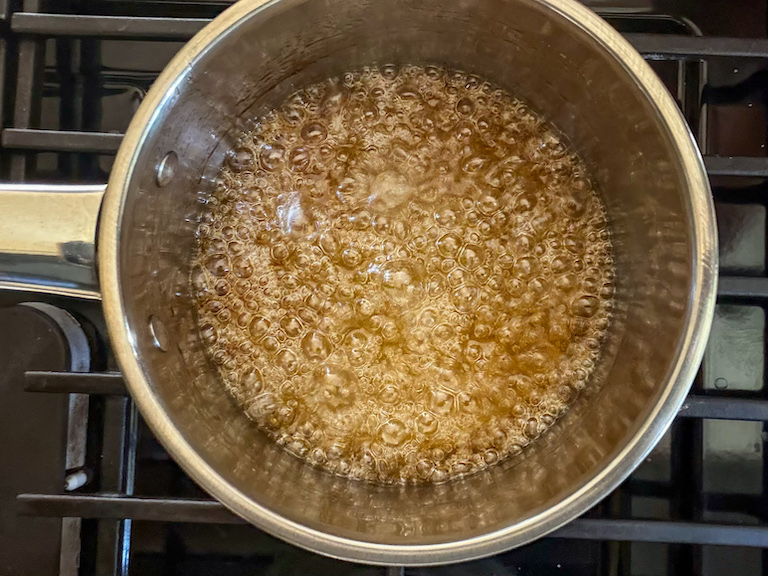
In a separate medium saucepan, combine granulated sugar, corn syrup, and water. Cook, without stirring, until mixture resembles honey, about 15 minutes, or 290° F (143° C) on a candy thermometer. Swirl the pan occasionally to keep the caramel moving.
Remove from heat. Pour warm cream over caramel, then wait a few seconds for the bubbles to subside.
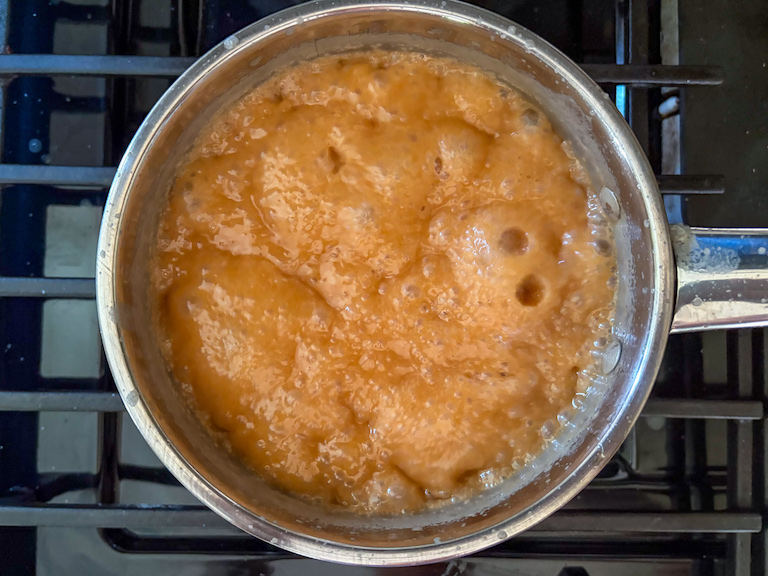
Cook over medium heat until temperature reaches 255-260° F (124°-127° C) on a candy thermometer.*
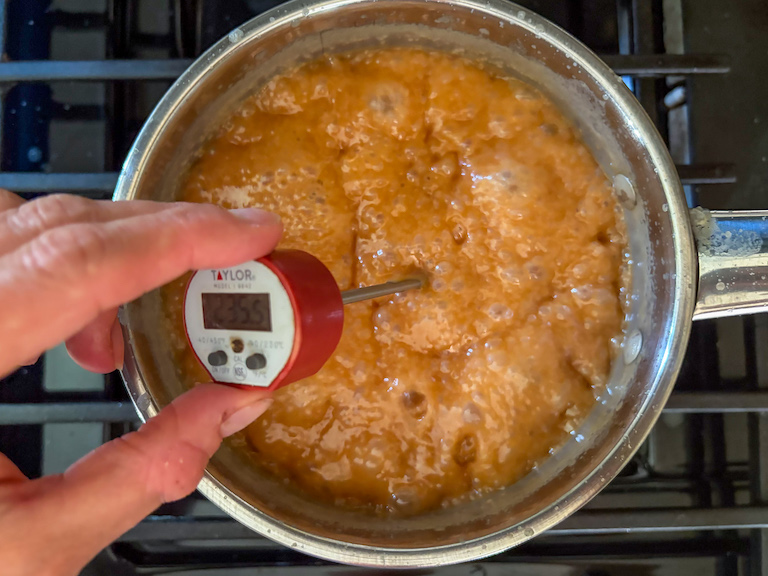
Remove from heat. Swirl in the food grade rosemary oil.
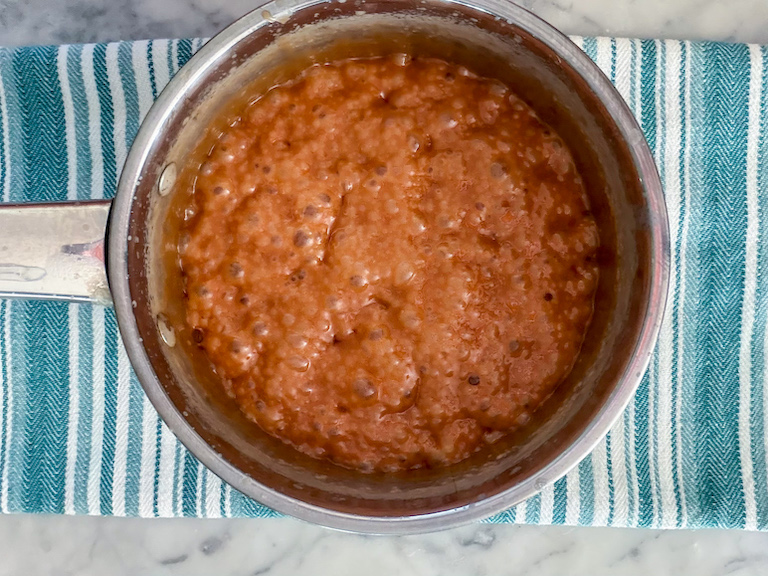
Immediately pour into prepared tin. Sprinkle with coarse sea salt or flaky sea salt.
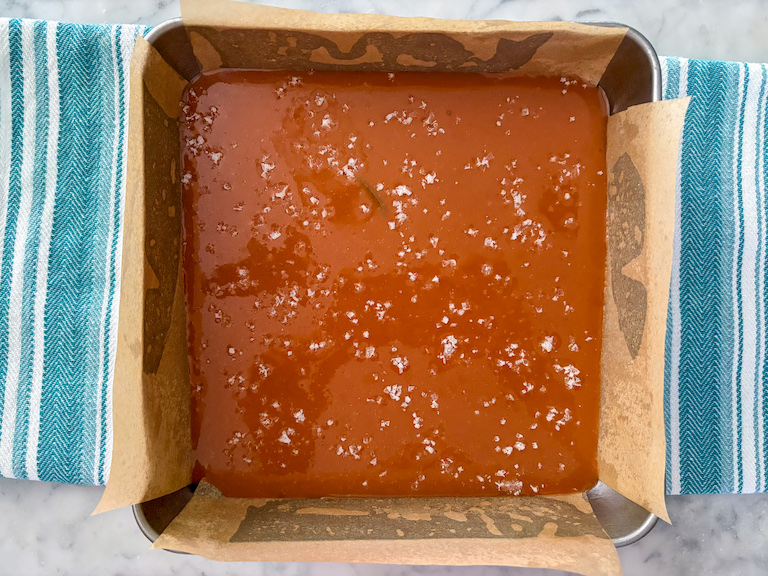
Allow to sit, uncovered, until caramel sets, about 6-8 hours, or overnight.
Lifting by the parchment edges, remove the caramel slab and place on a large cutting board. Peel away the parchment. With a sharp, well-oiled chef’s knife, cut caramel into squares or rectangles.
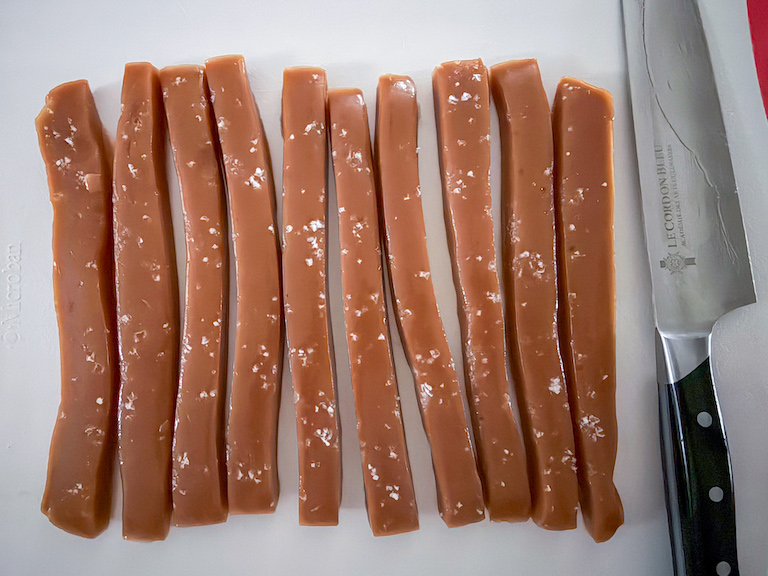
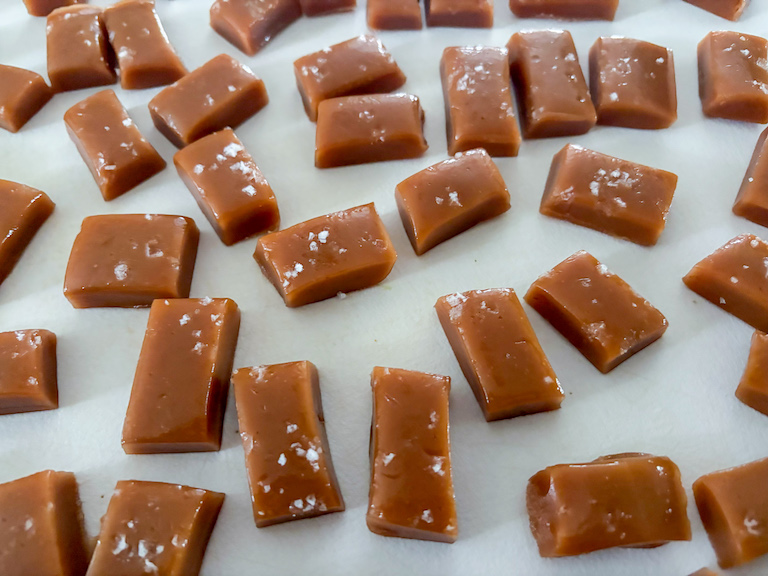
Wrap caramels in squares of parchment. Store in an airtight container at room temperature for up to 2 weeks.



Notes
*250° F (120° C) offers a good baseline temperature benchmark for caramels. I often cook mine to somewhere in the 255 – 260° F range, for a slightly firmer caramel. It may take a bit of experimenting to find the temperature that works best for you. For this batch, I cooked my caramel to 258° F (125° C); my finished caramels were chewy rather than gooey, but still soft enough to slice easily with a sharp knife.
- Prep Time: 20 minutes
- Cook Time: 40 minutes, divided
- Category: Candy and Confectionery
- Method: Stovetop

Other Caramel Recipes You Might Enjoy:
Pumpkin Spice Caramels
Apple Cider Caramels
Caramel Apple Lollipops
Salted Caramel Blondies
Homemade Caramel Sauce
And if you do make these, or any of my recipes, don’t forget to tag me @bastecutfold or use the hashtag #bastecutfold on Instagram. I always love to see what you’re making!