Fig and Rosemary Focaccia (Fig Bread Recipe)
This post may contain affiliate links. Please read the disclosure policy to learn more.
Thank you for supporting this blog!
A rustic fig and rosemary focaccia made with fresh sliced figs, rosemary, olive oil, and sea salt. With its crispy, salty crust and tender, olive-oil infused interior, this fig bread recipe balances salty, sweet, and herbal notes to form a loaf that works just as well for breakfast as it does for dinner. If you’re a fan of “figgy” recipes, like fig tarts, fig jam, or olive oil-roasted figs, you’re sure to love this fig and rosemary focaccia.

Why Did I Create This Recipe?
I’ve loved focaccia (Italian olive oil bread) ever since I first learned to make it during Intermediate Pâtisserie at Le Cordon Bleu London. In that class, we made a very basic rosemary and sea salt focaccia that remains a staple in my repertoire to this day. (I’ve posted a black olive spin on that recipe here.) Since then, I’ve also enjoyed experimenting with less traditional focaccia toppings, like grapes and capers, or apples and cheddar cheese. In this recipe, I’ve topped my loaf of olive oil bread with thinly sliced fresh figs, sprigs of fresh rosemary, and my favorite flaky sea salt.

Key Ingredients
- Bread Flour – I prefer to use bread flour (or strong flour) for focaccia. The higher protein count increases gluten development, promoting better texture, structure, and rise. However, you can make this recipe with all purpose flour (plain flour) or a mix of bread flour and all purpose. You can also experiment with other flour blends.
- Olive Oil – Focaccia relies on olive oil for flavor and texture, so choose a good-tasting, good-quality oil. After removing the baked loaf from the oven, brush the top of the loaf with additional oil (you really can’t add too much!) This final step adds moisture and gives the bread its shiny finish.
- Honey – I’ve replaced the sugar often found in bread recipes with a small amount of honey, for sweetness, softness, and to encourage caramelization. Any good-tasting honey (or hot honey!) will work.
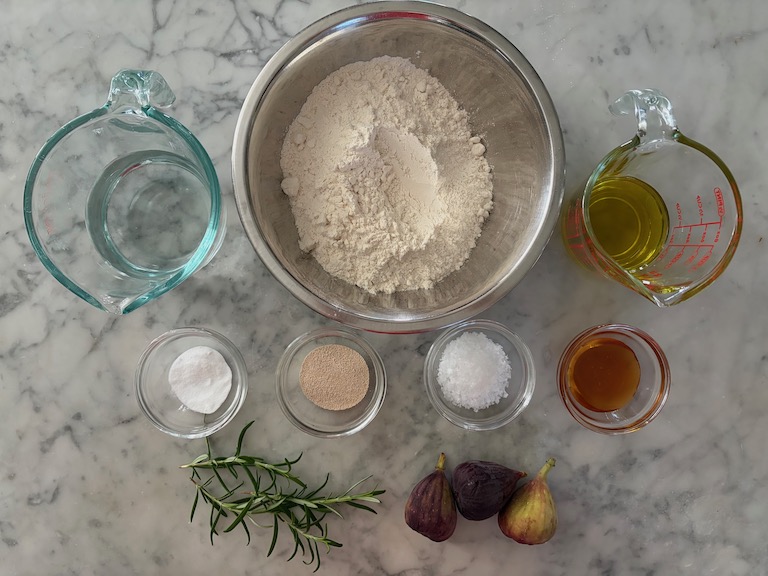
- Instant Yeast – I’ve used instant yeast because it’s faster, but feel free to substitute active dry yeast. Just remember to prove the yeast in warm water before mixing it with the other ingredients. And never allow yeast to come into direct contact with the salt in the dough, or the salt can kill your yeast and prevent the loaf from rising.
- Rosemary – Sprigs of fresh rosemary are an essential part of this recipe. Do not use dried rosemary; it lacks both the color and flavor of fresh. Save the leftover sprigs for rosemary caramels, shortbread, or sugared rosemary.
- Figs – You’ll need 2-3 ripe fresh figs, washed and very thinly sliced. To prepare the fresh figs, start by rinsing each one under a stream of cold water. Pat the outsides dry, trim the stems, then use a very sharp chef’s knife to slice each fig into thin, even slices:And figs are sometimes sold in large plastic packages rather than by weight, so if you have some left over, save them to make my fig and goat cheese tart recipe. Don’t make this recipe with dried figs.
- Salts – Kosher salt strengthens the gluten structure and enhances the flavor of the bread dough, while coarse salt gives the focaccia its signature crunch. You can sprinkle the loaf with coarse or flaked sea salt. Maldon and Halen Mon are two of my personal favorites for topping focaccia.

Tips and Tricks
- Let the dough rise slowly. A slow rise allows focaccia bread to develop flavor and texture. I usually do two hours for the first rise, and another hour for the second, but the exact time will depend on the temperature in your kitchen.
- Get your hands dirty. Before baking, press your fingers deep down into the dough to create pockets, or dimples. (This step gives the focaccia its signature “dimpled” look and creates plenty of places for the olive oil to settle.) And focaccia is meant to be rustic, so it’s fine if the loaf looks a little bit messy. No need to keep things perfectly precise.
- Baked on a rimmed tray. The raised edge of a half sheet rimmed baking tray prevents the olive oil from leaking all over your oven. Do not bake focaccia on a flat tray!
- Slice with serrated. A serrated knife (bread knife) works best for slicing focaccia. The saw-toothed edge allows you to cut through the loaf in clean, even slices, without tearing or breaking the bread.
- Choose fresh figs. When choosing fresh figs, look for plump, slightly soft, and unbruised fruits without any tears or blemishes. The figs shouldn’t smell rotten, nor should you notice any liquid leaking from the figs. In both the US and the UK, fig season peaks in the summer and autumn months, typically sometime between June and November. If you want to make fig focaccia in the off-season, see if your supermarket stocks imported figs. I don’t recommend substituting dried figs in this recipe.

- Measure by weight. Use a kitchen scale to weigh the flour by weight, rather than relying on volume measurements. Cup measurements are far less precise, and can yield a dough that is too dry (or too wet) to produce the perfect loaf.
- Buy a bench scraper – A bench scraper (a flat-edged, handheld metal or plastic tool) allows you to evenly combine the dough ingredients, and it’s handy for counter cleanup, too. While a metal bench scraper works best for recipes which require slicing (like these American-style scones), I prefer the softer edge of a plastic bench scraper for breadmaking.

Fig and Rosemary Focaccia (Fig Bread Recipe)
- Total Time1 hour
- Yield1 10-inch round loaf 1x
Fig and rosemary focaccia bread made with fresh sliced figs, sprigs of fresh rosemary, olive oil, and coarse sea salt.
Ingredients
Focaccia Dough:
288 grams bread flour (2 1/4 cups)
160 milliliters lukewarm water (2/3 cup)
50 milliliters olive oil (1/4 cup), plus more for drizzling
20 grams honey (1 tablespoon)
7 grams kosher salt (2 teaspoons)
6 grams instant yeast (2 teaspoons)
Topping:
130 milliliters olive oil, divided (2/3 cup)
2 5-inch sprigs fresh rosemary, broken into small pieces
2-3 figs, thinly sliced
Coarse or flaked sea salt, for sprinkling
Instructions
Line a half-sheet rimmed baking tray with parchment. Set aside.

In a large round bowl, combine bread flour, lukewarm water, olive oil, honey, kosher salt, and instant yeast. Use a bench scraper to bring the ingredients together until a soft dough forms.


Turn dough out onto a lightly floured countertop. Knead by hand until soft and elastic, about 8-10 minutes.


Form dough into a ball. Place in a well-oiled bowl, drizzling the top with even more olive oil.

Cover bowl and allow to stand in a warm place until dough doubles in size, about 1 1/2 – 2 hours.

Punch dough down. Place on prepared tray and press into an 8-9-inch round circle. Focaccia is supposed to be rustic, so don’t worry about being perfectly precise.


Cover tray with clingfilm/plastic wrap, then place a kitchen towel on top. Allow dough to prove until doubled in size, about 1 hour more.


Preheat oven to 400° F (205° C).
Peel away the plastic wrap. With a pastry brush, brush dough with olive oil. Arrange the figs evenly over the surface of the dough.

With your fingers, push the fig slices down and create deep dimples in the dough.

Drizzle about half of the remaining olive oil on top of the bread.

Dot the loaf with rosemary sprigs. Sprinkle with sea salt.

Bake in preheated oven for 25-30 minutes, or until top and bottom turn golden brown. Remove bread from the oven and pour remaining olive oil over top.

Slice with a serrated knife. Serve warm or at room temperature.

Store leftover focaccia in an airtight container at room temperature for up to one day, or wrap in foil and freeze for up to 3 months. That at room temperature.




Make-Ahead and Storage Suggestions
Homemade focaccia tastes best on the day it is made. Wrap leftovers in foil and store at room temperature for up to two days. This recipe is not suitable for freezing.
Other Focaccia Recipes You Might Enjoy
Grape Focaccia with Chili and Capers
Rosemary Focaccia
Apple Focaccia with Cheddar and Rosemary
Cranberry Chocolate Focaccia
And if you do make these, or any of my recipes, don’t forget to tag me @bastecutfold or use the hashtag #bastecutfold on Instagram. I always love to see what you’re making!