This post may contain affiliate links. Please read the disclosure policy to learn more.
Thank you for supporting this blog!
Guide to Commonly Used Liquid Sweeteners
In my recipes, I typically utilize a range of liquid sweeteners, including corn syrup, honey, and maple syrup. Having spent many years living in the UK, I also rely on common British sweeteners like black treacle and golden syrup. Through lots of trial and error, I’ve learned which sweeteners are interchangeable, which substitutions work effectively, and when it’s best reach for a different option instead.
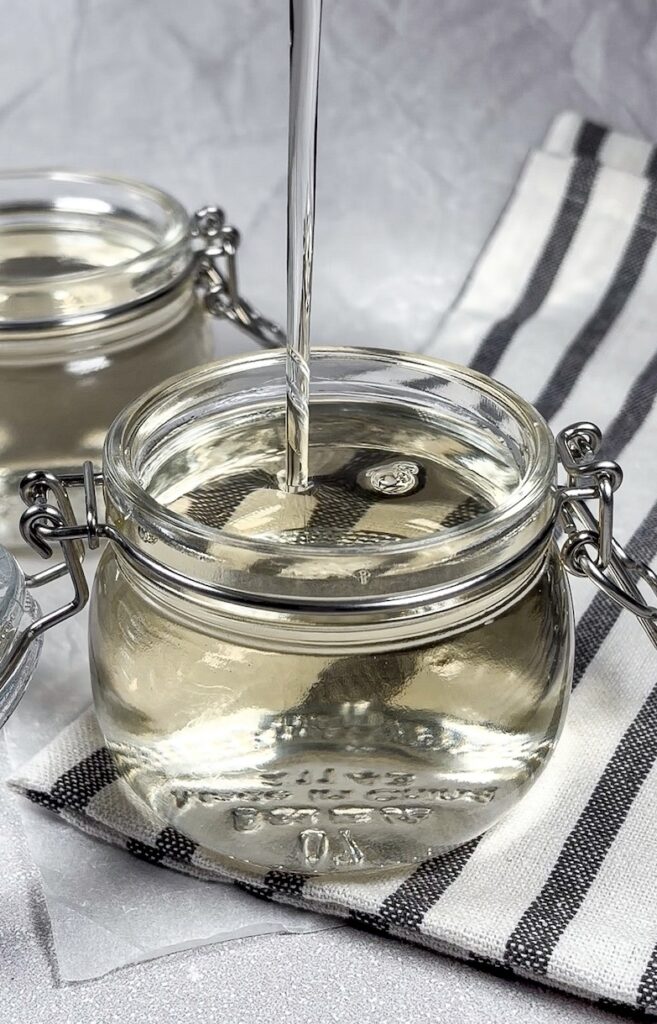
Corn Syrup
Corn syrup is a thick, clear syrup made from cornstarch, that prevents sugar from crystallizing. I use Golden Barrel corn syrup to develop my candy recipes, such as hard candies and lollipops. In most cases, corn syrup can be used interchangeably with light corn syrup (Karo Syrup) or liquid glucose.
Light Corn Syrup (Karo Syrup)
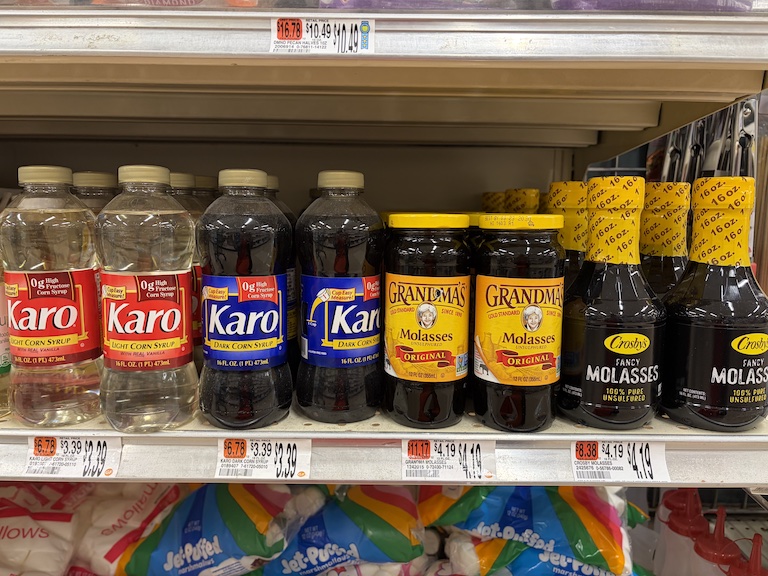
Light corn syrup is a type of corn syrup with added vanilla and salt. It’s thinner than corn syrup or liquid glucose, and often found in recipes for pecan pie, fudge, and marshmallows. (I use light corn syrup and corn syrup interchangeably in my marshmallow recipes, depending on what I have available.) In the US, Karo Syrup is ubiquitous, although many supermarkets also make their own generic versions. In the UK, you can purchase Karo Syrup from a specialty grocer such as Partridges, or substitute liquid glucose instead.
Liquid Glucose
Liquid glucose is a clear, viscous syrup made by breaking down starch, usually from corn or wheat. I first started working with liquid glucose when I moved to London to attend pastry school; in the UK, it’s much more readily accessible than corn syrup. I usually test my recipes with Dr. Oetker liquid glucose.
For candymaking and confectionery, liquid glucose serves as an effective substitute for corn syrup or Karo Syrup, but it is much thicker and stickier. Use a scale to measure liquid glucose by weight—it’s futile to use a measuring cup, because the glucose will cling to the cup and you’ll lose too much product in the process. In pastry school, we learned to wet our fingertips, then reach our hands directly into the bucket and remove the quantity needed. I still use this technique when weighing large volumes of liquid glucose, but for small quantities you can simply squeeze it from the tube.
Agave Nectar
Agave nectar is a liquid sweetener made from the agave plant. It is vegan-friendly, and can be used as a replacement in recipes calling for honey. I find that agave nectar runs much sweeter than honey or maple syrup, so I suggest starting with a smaller amount then adjusting the sweetness to taste.
Honey
Honey is a natural sweetener produced by bees. Its flavor varies by floral source, making it a popular choice for baking recipes, beverages, salad dressings, and drizzling over everything from baked brie to puff pastry tarts. I also like to infuse it with peppers to make my own hot honey.
While honey and maple syrup work interchangeably in most baking recipes, note that honey is not typically considered vegan, so stick with maple syrup or agave nectar if you need a vegan-friendly finished dish.
Golden Syrup
Golden syrup is a thick, amber-colored cane sugar syrup with a buttery, caramel-like flavor. In the UK, Lyle’s is the most popular brand, although many supermarkets also carry “own brand” golden syrups that are less expensive and work just as well. Golden syrup is a staple ingredient in British recipes like rocky road, flapjack, and clotted cream fudge.
Although honey most closely resembles golden syrup from a visual perspective, I find that light corn syrup makes the best replacement in recipes like rocky road; it more closely matches the level of sweetness and shares the same invert sugar properties that help to prevent crystallization.
Molasses
Molasses is a dark, thick syrup produced during the sugar refining process. It is a common ingredient in American recipes like blondies, gingerbread houses, and molasses cookies. I test most of my recipes with the Grandma’s Original brand of molasses.
Unless specified otherwise, baking recipes use unsulphured molasses (true molasses), not blackstrap. Blackstrap molasses is a thick, dark, salty, and bitter syrup made from the final boiling of the sugar refining process. Although you’ll occasionally find it in recipes for baked beans or marinades, blackstrap molasses is commonly recognized for its health benefits rather than its sweetening properties. None of my recipes call for blackstrap molasses. If you can’t find unsulphured molasses, substitute black treacle instead.
Black Treacle
When I moved to England, I quickly realized that I’d need to re-think many of my tried-and-true American recipes, because the ingredients weren’t readily available in the UK. This included any and every recipe with molasses which, unless you purchase pricey imported products or buy from a specialty grocer, simply does not exist on British supermarket shelves. Luckily, black treacle makes a highly effective substitute.
Black treacle is a thick, dark cane syrup similar to molasses but slightly less bitter, less viscous, and more complex in flavor. Like golden syrup, Lyle’s makes the “household name” brand of black treacle, but most supermarkets also carry their own generic versions. Black treacle is commonly used in British recipes like Christmas puddings and ginger biscuits, or for making gingerbread during the Christmas period. I’ve found that treacle works interchangeably with unsulphured molasses in most baking recipes.
Maple Syrup
Maple syrup is a natural syrup made by boiling down the sap of maple trees. It’s best known as a topping for pancakes and waffles, but is also used in glazes, sauces, and dressings; as a sweetener in overnight oats and a binder in energy balls; as a means of caramelizing roasted veggies and spiced nuts; and as a natural flavoring and sweetener for homemade maple ice cream. Today, you’ll frequently find maple syrup in baking recipes because it makes a reliable, vegan-friendly replacement for honey.
When selecting maple syrup, double-check to make sure you’ve chosen pure, 100% maple syrup. Do not use “pancake syrup” or imitation maple syrup. These products consist mostly of flavored and colored corn syrup rather than the pure tree sap of a maple tree, and are not a suitable replacement for real maple syrup.
Date Syrup
Date syrup is a thick, dark sweetener made by boiling and reducing pitted dates and water. It is vegan-friendly, and less processed than corn syrup or other refined sugars. Rich and caramel-y, the flavor of date syrup reminds me of brown sugar or muscovado sugar.
I don’t use date syrup in many of my recipes, primarily because it’s more expensive than other liquid sweetener options. However, you can experiment with date syrup as a replacement for other vegan sweeteners like maple syrup and agave. I do find that date syrup works nicely in date-forward recipes like date balls and bars, and I also enjoy it in this date and almond milk smoothie.
Simple Syrup
Simple syrup is a liquid sweetener made by dissolving sugar in water. It’s most often used to sweeten cold beverages where granulated sugar doesn’t dissolve easily.
In its most basic form, simple syrup is just that—sugar and water. However, you’ll find plenty of recipes for syrups infused with everything from flowers to fruit to herbs to citrus peels, which can be used to add flavor to tea, coffee, cocktails, lemonade, and hot chocolate; or as a moistening, sweetening soaking syrup for cakes, cupcakes, and other baked goods. I’ve developed a large collection of simple syrup recipes and frequently include these as a component in my other dishes.
If you don’t have time to make your own simple syrup, store-bought cocktail syrups make a good substitute.

Rebecca Frey is a freelance recipe developer, food writer, photographer, stylist, and pastry chef. She earned the Diplôme de Pâtisserie (French Pastry Techniques Diploma) from Le Cordon Bleu London in 2020 and an MSc in Culinary Innovation from Birkbeck, University of London in 2022, where she focused her dissertation research on Pennsylvania Dutch recipes. She also holds a Professional Chocolatier’s Certificate from Ecole Chocolat. Rebecca has developed recipes for websites including Serious Eats, The Spruce Eats, Wine Enthusiast, and others. Follow her on Instagram @bastecutfold.