Prune Clafoutis Recipe
This post may contain affiliate links. Please read the disclosure policy to learn more.
Thank you for supporting this blog!
A clafoutis recipe featuring a batter made from eggs, milk, cream, and sugar, poured over prunes and baked to a custard-like texture. This traditional French dessert is equally delicious for brunch or dessert, and tastes just as good warm as it does at room temperature. Best served with a dusting of powdered sugar!
What Inspired This Prune Clafoutis Recipe?
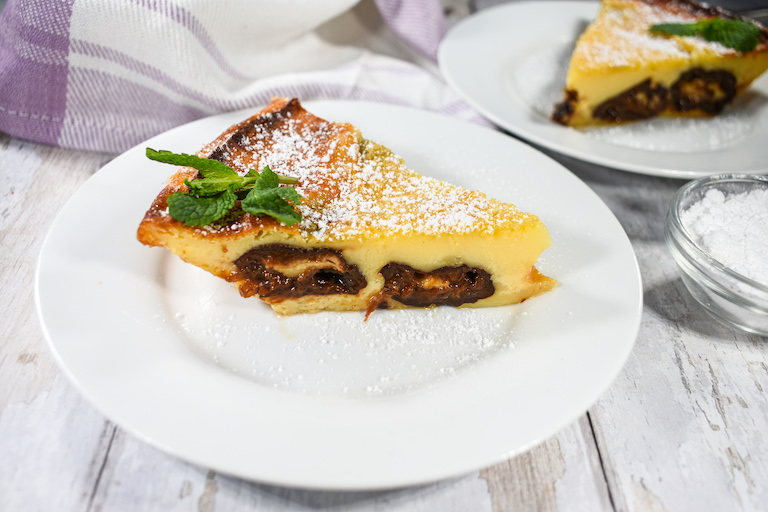
I first tasted—and learned to make—clafoutis during my French pâtisserie studies at Le Cordon Bleu, and, along with macarons and chaussons aux pommes, it immediately became one of my favorite traditional French desserts. Clafoutis consists of a simple batter (typically made from eggs, flour, sugar, milk, and sometimes cream) poured over fruit, then baked to a custard-like consistency.
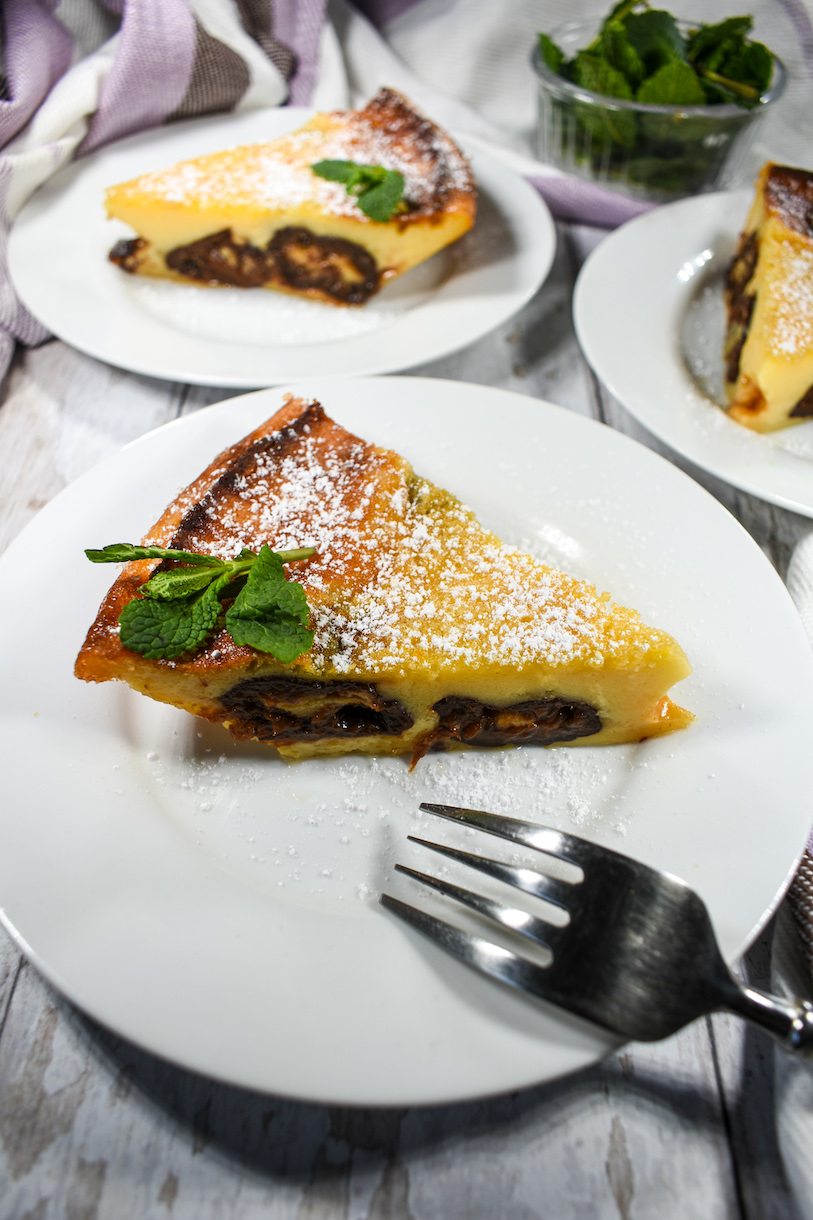
Before baking, the batter resembles a thick crêpe or pancake batter, but in the oven it transforms into something new: a sliceable, cake-like dish with a puffy, golden brown top, a slightly jiggly texture, and fruit baked in a thick, eggy custard. Some people compare it to flan, and I can definitely see why.

Part of the beauty of clafoutis is how easy it is to make, with no crust to prepare as with other French classics like tarte aux pommes or tarte aux fruits. Comprised of minimal ingredients and with plenty of room for creativity, it’s a perfect opportunity to showcase seasonal fruit.
The most traditional version contains cherries, but here I’ve used prunes instead, since it’s how I learned to make clafoutis at Le Cordon Bleu. (You’ll also find clafoutis made with other fruits, such as apples, pears, berries, or apricots.) Clafoutis tastes great warm or cold, and it’s sweet but not overly so, so it works just as nicely as a brunch dish as it does as a rustic dessert. I like to eat the leftovers cold for breakfast, too.

Prune Clafoutis Ingredients
To make this clafoutis recipe, you’ll need the following ingredients:
- Unsalted Butter – For greasing the baking dish.
- Granulated Sugar – You’ll need a tablespoon of sugar for preparing the baking dish, plus more for sweetening the batter.
- All-Purpose Flour – Flour thickens the custard and gives the clafoutis its signature puffiness.
- Whole Milk – Along with eggs and cream, whole milk forms the smooth, thick clafoutis batter.
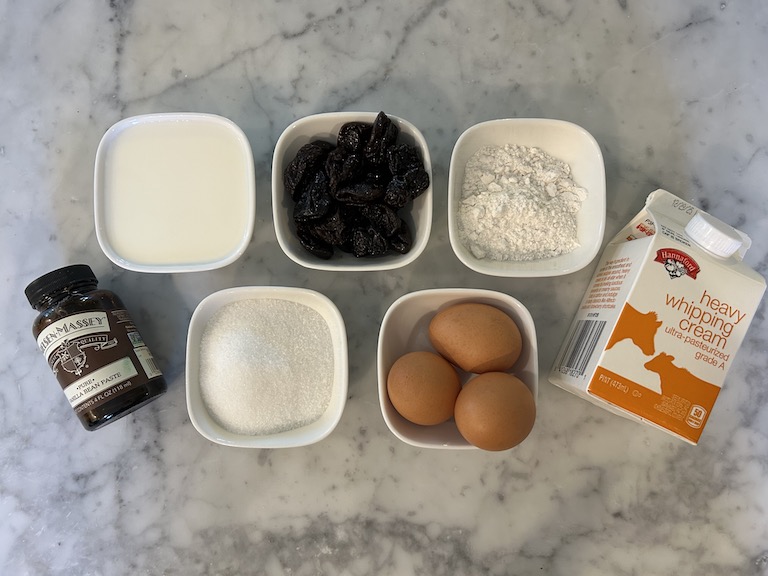
- Eggs – Three large eggs give the batter its custardy, eggy texture.
- Whipping Cream – Some recipes call for milk only; I make mine with a combination of milk and cream, as I learned to do it at Le Cordon Bleu. The addition of cream makes the custard ultra-rich and silky.
- Vanilla Bean Paste – Vanilla bean paste (I recommend a good-quality brand, such as Nielsen-Massey or Taylor & Colledge) adds flavor to the batter. You can substitute vanilla extract, but avoid cheap imitation flavorings.
- Prunes – I developed this recipe with a 290-gram/10-ounce can of prunes, but depending on your location, you might find it difficult to source canned prunes. To substitute bagged prunes, see my notes below.

Notes on Prunes
You can make this clafoutis recipe using canned or bagged prunes. I developed this recipe using canned prunes, which are readily accessible at any UK grocery store but are not as widely available in North America, where prunes typically come packaged in bags or cardboard containers with the liquid already removed.
Whichever you choose, it’s important to take time to properly prepare the prunes before adding them to the baking dish. Below are instructions for preparing both types of prunes.
To use canned prunes:
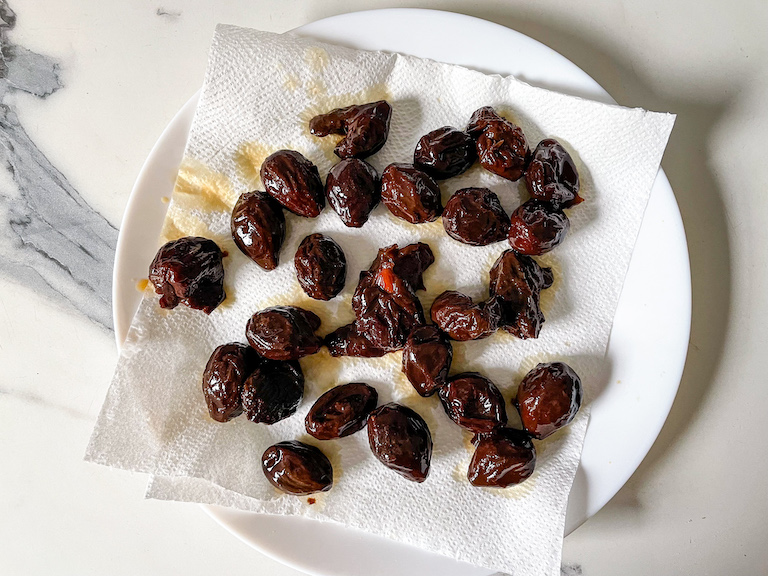
Thoroughly dry the fruit before getting started. To do so, arrange the canned prunes on a small plate lined with a paper towel. (I also like to pat the tops dry with a second towel.) This removes excess moisture and prevents your clafoutis from turning soggy.
To use bagged prunes:
If you can’t find canned prunes, you can substitute 20 pitted bagged prunes (roughly 130 grams, or about 3/4 cup of prunes), soaked in water or alcohol.
To soak, place the prunes in a small bowl and add 240 milliliters (1 cup) water or alcohol, such as bourbon, whisky, or rum.

Soak for 6-8 hours, or until prunes turn very plump and soft.

Pass the soaked prunes through a fine mesh strainer to remove the soaking liquid, then drain on a paper towel-lined plate (as described above) before proceeding with the recipe as written.

Preparing the Dish
After preparing the prunes, it’s time to prepare the baking dish.
To do so, apply a generous coat of butter to the dish (you can use an 8- or 9-inch round baking dish, a deep pie plate, or any similar type of dish) then sprinkle it with granulated sugar:


Then, layer the prunes into your prepared dish. (Remember, you’ll add the fruit first, then pour in the batter!)

And that’s it! You’re ready to make the batter and bake your clafoutis to custardy perfection.
Ideas for Serving Prune Clafoutis
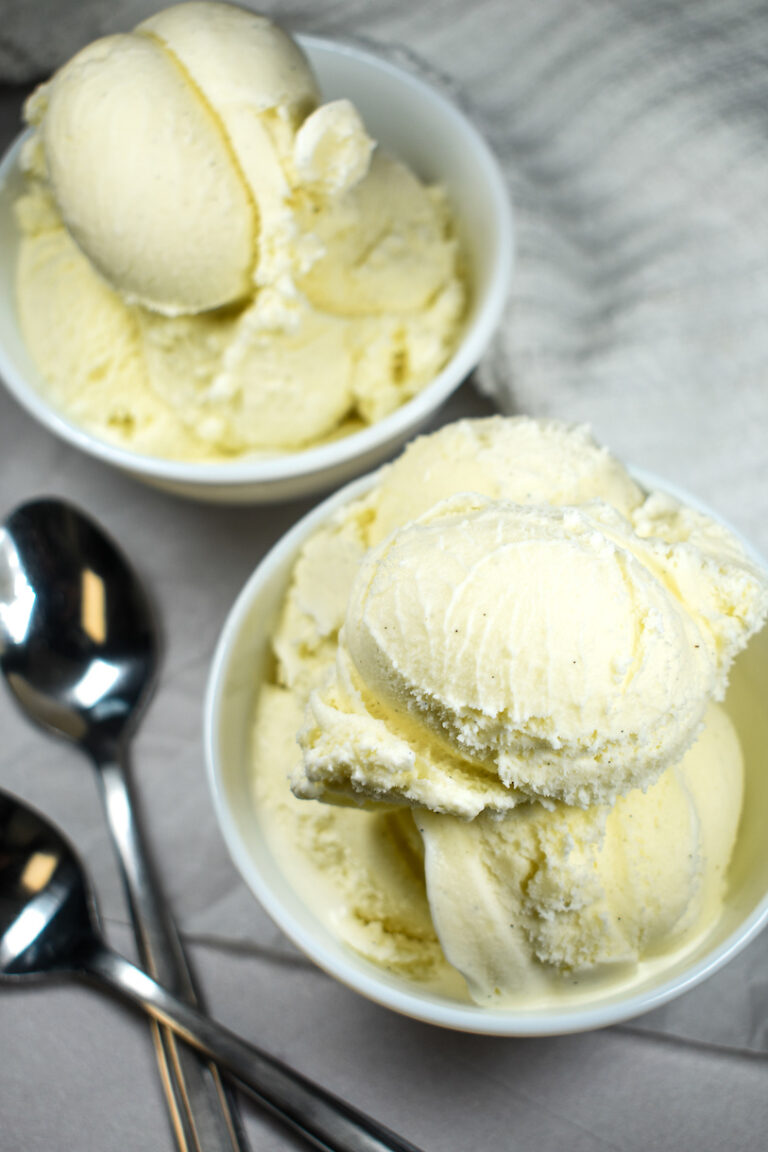
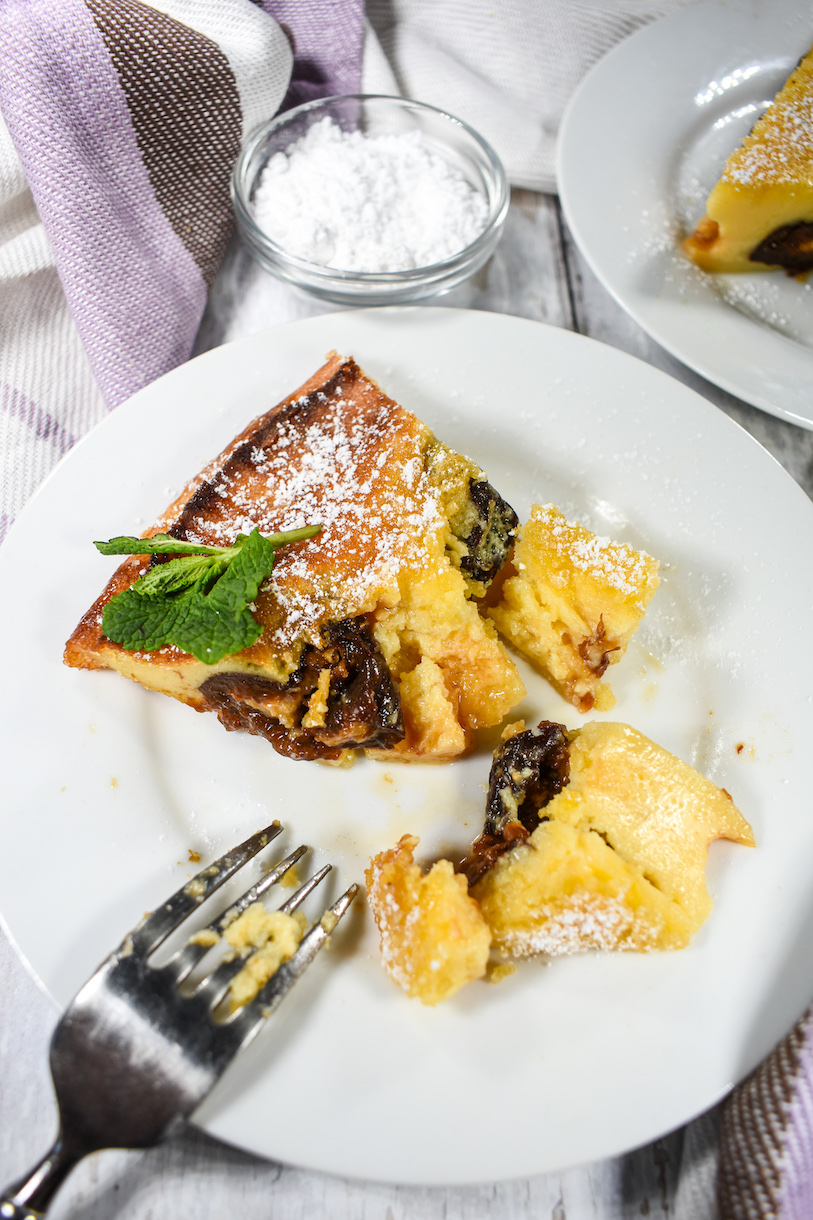
Clafoutis is wonderfully versatile and can be enjoyed on many occasions. Serve it warm for dessert or brunch, or slice and enjoy it chilled or at room temperature. I like to finish mine with a light dusting of powdered sugar, but you can also add other garnishes like fresh herbs, whipped cream, vanilla ice cream, or your favorite seasonal fruit or compote. Clafoutis also refrigerates beautifully overnight, so it’s perfect for leftovers the next morning.
Make-Ahead and Storage Suggestions
Clafoutis taste best on the day it is made, but leftovers can be refrigerated for up to 3 days. The texture becomes slightly denser and firmer (but no less tasty!) after chilling.
Other French recipes you might enjoy:
French Macarons
Blackberry Pear Mille-Feuille
Choux Buns
Chaussons aux Pommes
Tarte aux Fruits
And if you do make these, or any of my recipes, don’t forget to tag me @bastecutfold or use the hashtag #bastecutfold on Instagram. I always love to see what you’re making!
Prune Clafoutis Recipe
- Total Time0 hours
- Yield1 clafoutis (about 6-8 servings) 1x
A clafoutis recipe featuring a batter made from eggs, milk, cream, and sugar, poured over prunes and baked to a custard-like texture.
Ingredients
Pan prep:
15 grams unsalted butter (1 tablespoon)
15 grams granulated sugar (1 tablespoon)
Batter:
40 grams all purpose flour (1/3 cup)
105 grams granulated sugar (1/2 cup)
150 milliliters whole milk (2/3 cup)
150 milliliters whipping cream (2/3 cup)
3 large eggs
1 teaspoon vanilla bean paste
200 grams canned prunes, drained, pitted, and dried on a paper towel (one 290-gram or 10-ounce can, or about 20 prunes), or 20 pitted bagged prunes, soaked in water or alcohol*
Instructions
Preheat oven to 375° F / 190° C.
Butter an 8-inch or 9-inch round baking dish or deep pie plate. Sprinkle generously with granulated sugar.

Add the prunes, distributing them evenly across the bottom of the dish. Set aside.
In a large bowl, whisk together granulated sugar, whole milk, whipping cream, eggs, and vanilla bean paste.

Sift in the flour and whisk to combine.


Pour batter into prepared dish. (Do not overfill. Depending on the size of the dish you’ve chosen, you might have a tiny bit of batter left over.)

Bake in preheated oven for 40-50 minutes, or until puffy and lightly golden brown but still slightly jiggly in the center, and a toothpickcomes out mostly clean.

Serve warm, at room temperature, or chilled.

Store leftover clafoutis in the refrigerator for up to 3 days.


Notes
*See post above for notes on preparing the prunes
- Prep Time: 15 minutes
- Cook Time: 50-60 minutes
- Category: Custards and Puddings
- Method: Oven
- Cuisine: French